
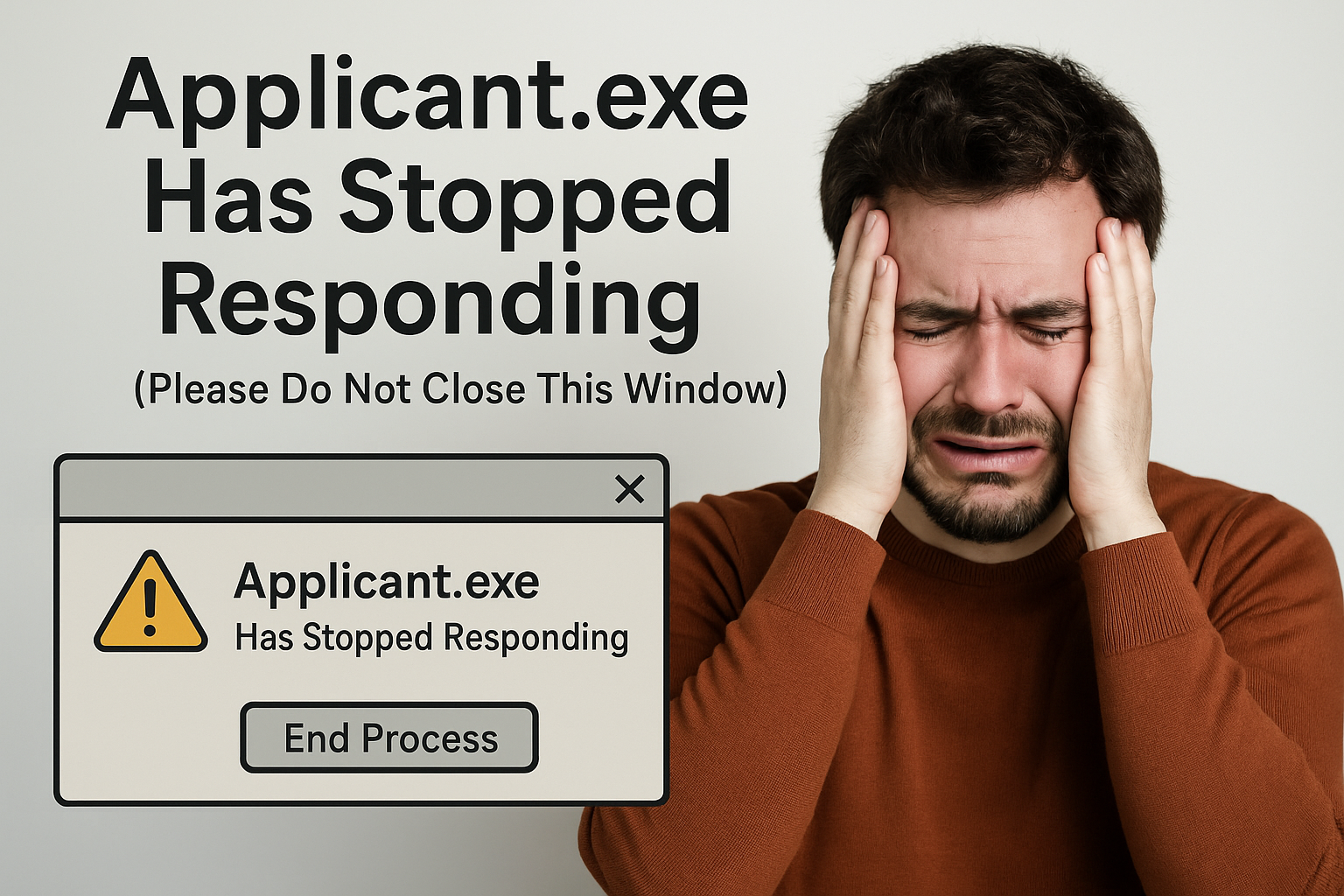
Modern job hunting feels like trying to stream a movie on dial-up while the universe keeps buffering your confidence. You open your laptop with hope, a fresh cup of coffee, and the kind of optimism that belongs in a Pixar film. Five minutes later you’re calculating whether your personality counts as “transferable skills.” You learn new phrases like “culture add,” which apparently means “someone exactly like everyone else, but spicier.” You upload your résumé to seventeen portals, each of which politely scrambles your formatting like a breakfast omelet. You write cover letters that read like love notes to a robot who never texts back. You stare at your inbox so long it starts to look like a blank museum wall labeled “Expectation.”
And still, the heart keeps showing up. Because for all the absurdity, job hunting is emotional weightlifting: you press rejection off your chest every morning just to make room for a little hope by lunch. You become fluent in corporate astrology—reading vague job descriptions like horoscopes: “A dynamic self-starter with strong cross-functional empathy will thrive.” Is that me? It could be me. Maybe I am a Capricorn with eight years of Kubernetes. Maybe I’m bilingual in Buzzword and Desperation.
There’s the ritual of tailoring your résumé, which is basically changing outfits for a blind date. Every posting wants a new version of you: strategic, detail-oriented, self-directed, collaborative, independent, extroverted, also mysteriously invisible. You craft bullets so sharp they could cut glass, then get a one-line rejection faster than you can say “motivated team player.” The silence hurts more than the no. At least “no” is a closure; silence is a mirror you’re forced to look into.
We keep going anyway. Because somewhere past the automated gatekeepers and the awkward Zoom interviews and the “we decided to move in a different direction” emails lives a team that needs exactly the kind of chaos and care you bring. Modern job hunting is messy. But it’s also where you find proof that you still want something enough to chase it—even when your feet hurt and your inbox won’t make eye contact.
The Application Portal and Other Haunted Houses
Every portal promises simplicity—“This will only take five minutes”—which is a lie told with a straight face and a spinning wheel. You sign up for an account, verify your email, then verify that you verified your email, then answer a security question about your childhood pet (who is now part of your two-factor authentication and, frankly, your career). You upload your résumé and the system asks you to type your entire résumé into small boxes, like a penance for dreams.
You’re asked to list every job you’ve ever had, including the ones you’ve tried to forget: the three months at that startup where the CEO measured productivity in inspirational quotes; the retail holiday season that taught you the true meaning of endurance; the freelance sprint that lasted six unpaid weeks and a lesson in invoices that never arrive. You paste in carefully crafted bullets that begin with power verbs and end with quantifiable results. The parser converts “Increased revenue by 27%” into “Responsible for money feelings.”
Then comes the questionnaire, a bright carnival of trick questions. “Are you a perfectionist?” No, I’m a recovering one. “Can you work independently and with a team?” Yes, I am both a lone wolf and a pack animal; I contain multitudes and a calendar. “Tell us about a time you failed.” Which time? The one where I tried to prove my worth by never resting, or the one where I believed praise meant safety? You want 250 characters? Fine: I failed at being a machine. I remembered I am human. I adjusted.
If you’re lucky, you get the optional fields: your portfolio, your LinkedIn, your GitHub of life choices. You attach proof of existence. You hit submit. The screen says, “Thanks for applying!” as if it just adopted you. The confirmation email arrives like a participation ribbon for the marathon you haven’t run yet.
And then the waiting. The portal status updates are as vague as a distant relative’s Facebook post: “Under Review.” “In Process.” “Closed.” You begin to narrate your own saga. Under review by whom? In process of what? Closed to whom? Somewhere, a committee made of calendars and bandwidth flips a coin with your name on it. Meanwhile, you refresh the tab like it’s a slot machine that pays out in dignity.
Yet—and this is the annoying, beautiful part—you keep submitting. Because hope has muscle memory. It remembers what it felt like to be chosen. It remembers your best day at work and your favorite teammate and that one project where you watched an idea turn into something people could touch. Hope drags you through the haunted house and points out the exit sign: “Try again.”
The Interview Circus (Starring You, Your Wi-Fi, and Existential Dread)
Scheduling is step one of the circus. You receive an email with a link to pick a time, but the link opens a calendar with three Tuesdays from now at 6:10 a.m. or 5:55 p.m., both labeled “Quick Chat.” You accept because you are humble, hungry, and fluent in time zones. The recruiter is kind, efficient, and asks you to “walk me through your résumé,” which you do like you’re guiding someone through a museum of your own choices. You linger on the wins. You glide past the layoffs. You blend honesty with the kind of optimism that doesn’t make you sound delusional. Sometimes it works. Sometimes it doesn’t. You send a thank-you note anyway because gratitude is not a strategy; it’s a compass.
Next is the panel interview: five faces, six if you count yours, plus your router, which is trying to audition for the role of chaos. You test your mic, your lighting, your smile. They ask scenario questions that require you to invent a small opera on the spot. “Tell us about a time you had to push back.” You recall the day you set a boundary and didn’t apologize afterward. “What would you do in your first 90 days?” You paint a blueprint that is part empathy, part systems, part “please let me make things better.”
There is always the curveball: “What’s your biggest weakness?” You refuse to say “I care too much,” because that’s a cry for help disguised as a punchline. You try honesty: “I sometimes try to rescue projects that aren’t mine to rescue. I’ve learned to ask, ‘Is help wanted or is help helpful?’ and build guardrails.” The panel nods. You can’t tell if they agree or if they are thinking about lunch.
A second round becomes a third, which becomes a take-home project. You complete it with the focus of a surgeon and the hope of a lottery ticket. You submit. You wait. The circus breaks for intermission. Days pass. You reread the job description like it holds secret runes. You debate sending a follow-up that is confident but not clingy, warm but not weird. You hit send. You close your laptop softly, as if sound can spook opportunity.
Sometimes the “no” arrives quickly. Sometimes it never does. And on the rarest, sweetest days, you get the email that begins with “We’d love to…” You read it twice, then a third time, because relief is a timid animal. You tell your people. They say what they always say: “We knew it.” You didn’t always know it, and that’s okay. The circus folds its tent. You breathe like a person again.
The Quiet, Stubborn Work of Believing in Yourself
Modern job hunting is a technical process, sure. But underneath the dashboards and the platforms and the polite rejections is the real work: protecting your sense of worth from metrics that don’t know your name. You learn to separate data from identity. “Not selected” means “not selected by this team, at this time, for this thing,” not “unworthy,” not “unlovable,” not “mistake.” You practice self-respect like it’s a skill—because it is.
You build a rhythm that honors both effort and rest. Mornings for applications, afternoons for learning, evenings for being a person. You curate your circle: the friend who understands that encouragement is not advice; the mentor who tells you which bullet point to elevate; the former coworker who reminds you of the project that proves you’re not making this up. You swap war stories with fellow travelers. You all look a little tired and a lot brave.
You revisit your story. Not the sugarcoated one, the real one. The times you cared too much. The times you chose integrity over speed. The part where you learned to apologize without erasing yourself. You write it down. You practice saying it out loud. You watch your shoulders drop when you remember that your value isn’t a line item—it’s a way you move through rooms, a way you solve problems, a way you treat people.
And then, because life enjoys symbolism, something small goes right. A stranger replies to your cold outreach. A former client recommends you without being asked. A hiring manager says, “I read your case study and I could hear your voice in it.” A raccoon knocks over your trash can at 2 a.m. and you think, weirdly, “That’s me—stubborn, resourceful, unembarrassed by the mess.” You smile. You go back inside. You set your alarm. You will try again tomorrow.
Here is the secret nobody prints on career blogs: job hunting isn’t about becoming impressive; it’s about becoming honest. Honest about what you want, what you’re good at, what you won’t tolerate, and the kind of people you do your best work with. Honest about your limits. Honest about your resilience. The more honest you become, the more the process shifts from “Please pick me” to “Let’s see if we pick each other.”
If you’re in the thick of it right now—if your browser has twelve tabs open and your heart is running on fumes—take this with you: You are not behind. You are not broken. You are in the middle. Middles are loud, disorienting places where every direction looks like a guess. But middles are also where momentum is born. Keep your rituals small and your hope stubborn. Write the résumé, yes—but also write the story you would want a kinder world to read.
One day, the email will come, or the phone will ring, or a door you didn’t know existed will swing open, and you’ll step through it carrying everything you learned in the waiting. You’ll sit at a new desk, meet a new team, open a new document, and realize something astonishing: you didn’t just find a job. You found yourself here—still funny, still fierce, still tender, still trying. And that, more than any title, is a career worth building.
😂0😍0😢0😡0👍0👎0






Can you be more specific about the content of your article? After reading it, I still have some doubts. Hope you can help me.
Thank you for your sharing. I am worried that I lack creative ideas. It is your article that makes me full of hope. Thank you. But, I have a question, can you help me?