
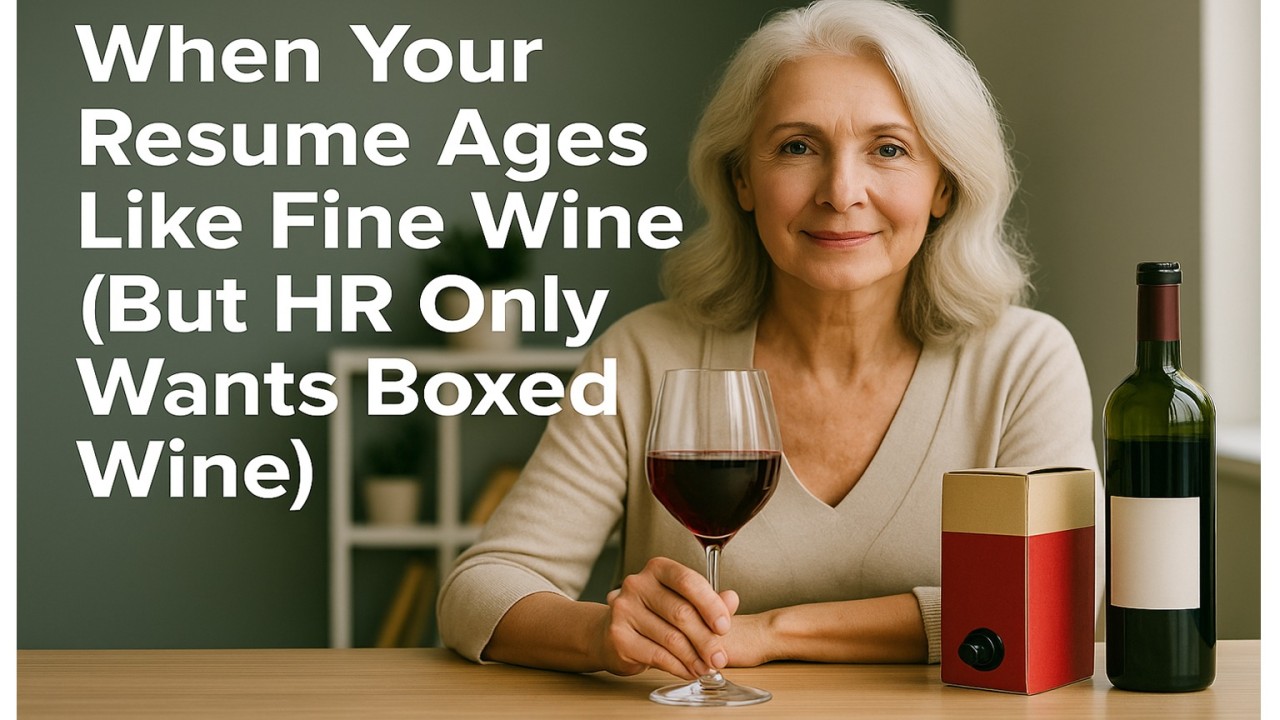
Let me tell you something about resumes. They’re like Tinder profiles for jobs. You spend hours crafting the perfect version of yourself, trimming the rough edges, adding just enough sparkle to catch attention but not so much that you look like a walking neon sign. Then you toss it into the void, cross your fingers, and hope that someone, anyone swipes right.
And then comes the advice. So much advice. “Keep it one page.” “No, two pages.” “Use Times New Roman.” “Never use Times New Roman, recruiters will burn your application in the town square.” “Make it ATS friendly.” “Don’t make it too ATS friendly or it’ll read like you’re auditioning to be a robot.” It’s chaos out there, friends.
But today, I stumbled across a comment that hit me right in the feels. The brilliant Sally Yoder said:
“Never add a photo or graduation date to your resume! You only need to highlight the last 10 years of experience and don’t mention decades of experience. Ageism is rampant so don’t lay your cards out there for everyone to see. You can still be very proud of your experience without setting yourself up for discrimination and rejection!!”
And whew. That one knocked the wind out of me, not because it was wrong, but because it was so right. Ageism is the sneaky villain of the job market. It doesn’t kick down the door like layoffs do. It doesn’t spam your inbox like fake recruiters promising six figures if you’ll only wire them $50 for “orientation materials.” No, ageism lurks. It’s the whispered “overqualified” rejection. It’s the silence after you proudly list 30 years of experience. It’s that awkward moment when you realize HR is looking for “entry level with 15 years of experience” but somehow your 20 years makes you a risk.
So we’re told to trim. Hide. Chop down our stories like we’re bonsai trees, manicured into a tiny, palatable version of ourselves. Just the last 10 years, please. No graduation dates, because the moment they see 1998, suddenly they picture you showing up to interviews with a flip phone and dial-up internet. Forget the decades you spent learning, grinding, and surviving layoffs that could’ve been Netflix thrillers. All of that becomes invisible ink.
And yet, here’s the emotional catch: you should still be proud. Proud of every late night project, every office pizza bribe to keep your team coding until midnight, every “temporary” job you turned into a career lifeline. Just because you don’t print the whole story on the resume doesn’t mean it doesn’t live inside you. It doesn’t mean it hasn’t shaped the professional you are today.
But man, it hurts. It hurts to crop your life’s work into a 10 year Polaroid just to fit someone else’s bias. It hurts to know you can run circles around the software they’re using, but HR is worried you’ll ask where the fax machine is. And it hurts that we’re still playing this game, camouflaging wisdom so we don’t scare off recruiters like deer in headlights.
Here’s my advice (and I’ll say it with humor, because if we don’t laugh we’ll cry):
- Don’t put your graduation year unless you want HR to start doing math faster than a casino pit boss.
- Don’t list “20+ years of experience” unless you want to hear the phrase “overqualified” disguised as a compliment.
- And for the love of Wi-Fi, don’t add a photo. This isn’t Facebook Marketplace, you’re not selling a used couch.
But also, don’t let the trimming make you feel less. You are not just 10 years of bullet points. You are late nights, tight deadlines, impossible bosses, miracle saves, and wisdom that doesn’t fit neatly into a template. You are all of that.
And maybe, just maybe, that’s the real secret. The resume is just the trailer. The interview is the movie. And you, my friend, are a blockbuster that hasn’t finished running yet.
So yes, play the game. Protect yourself. Adjust the resume. But when you finally sit across from that recruiter, whether they’re human or HR bot 3000, let them feel the decades of strength, humor, and grit behind your smile.
Because paper might hide it, but people can’t ignore it when you bring it into the room.
And that, legends, is how you beat ageism: by showing them that fine wine may come in older bottles, but it still leaves the strongest impression.