There are few moments in modern adulthood more cinematic than receiving a job offer when you’re exhausted, hopeful, and just delusional enough to believe the universe has finally stopped using your life as a focus group for disappointment.
Picture it: the salary is good. The benefits are solid. The recruiter is using words like “growth,” “impact,” and “culture” the way people sprinkle parmesan on pasta when they want you to ignore the fact the noodles are undercooked. The hiring manager smiled with their eyes. Someone said, “We really value authenticity,” which is corporate for, “Please be authentic in a way that requires no emotional labor from us.”
And there I am, hovering over the acceptance button like it’s the red wire in a bomb-defusal scene. My cursor is trembling. My bank account is doing that thing where it quietly tries to leave the chat. I’m already mentally assigning a name to my future work laptop like we’re going to war together.
Then the company clears its throat. The tone shifts. The air gets colder. The recruiter leans in with the same energy as a friend who’s about to say, “I love your outfit, but…”
“Before you accept,” they say, “there’s just one thing.”
Now, in a normal world, “one thing” is paperwork. It’s a background check. It’s choosing between the PPO and the HSA. It’s finding out whether the company hoodie runs small and whether the office has a snack budget or a “snack philosophy.”
But no.
This was not one thing. This was a lifestyle demand.
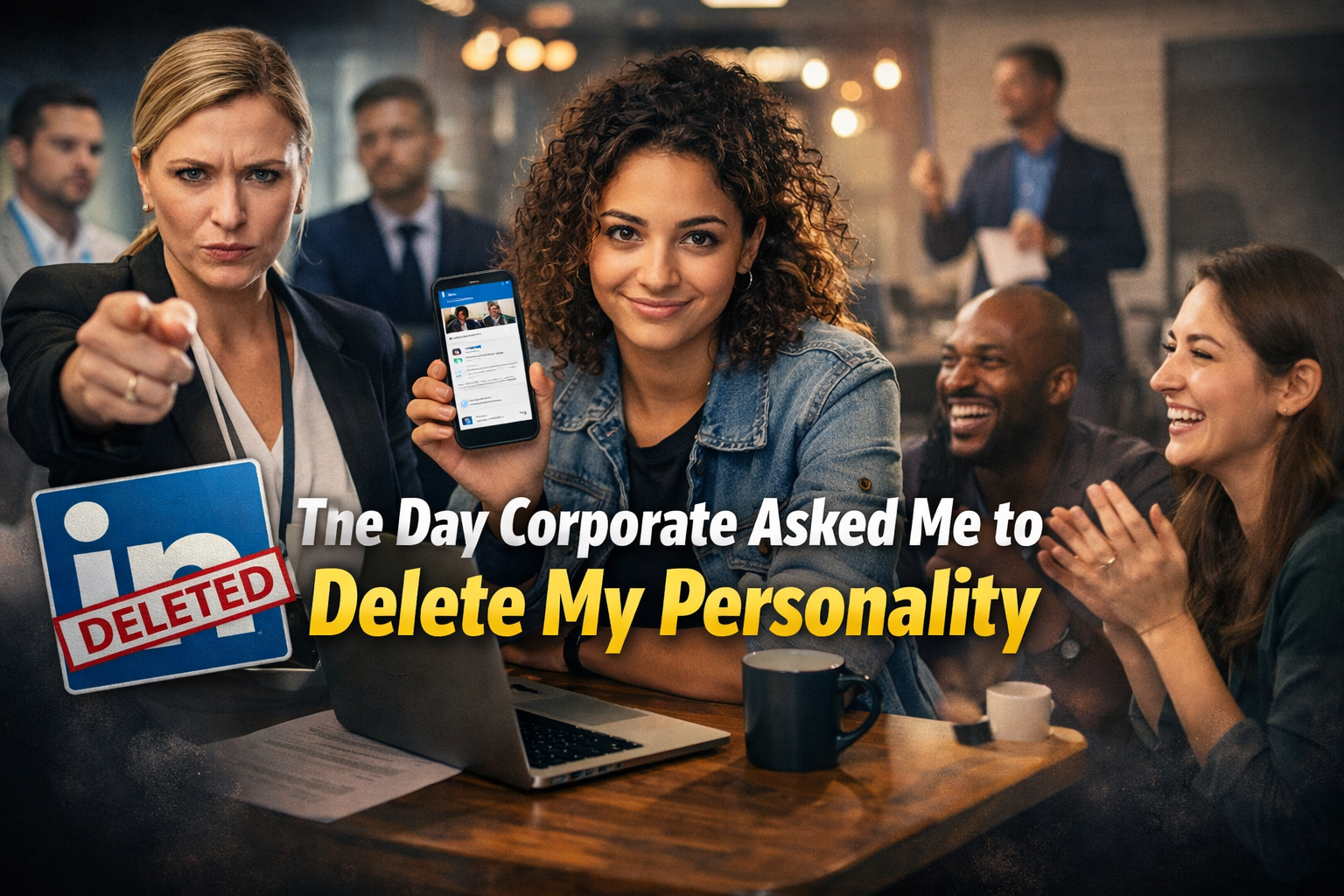
“We’d need you to take down your LinkedIn… permanently.”
Not deactivate. Not change your settings. Not stop posting. Not switch your profile photo from “friendly human” to “neutral employee of the month candidate.”
Delete.
As in: erase your digital footprint. Remove your voice. Vacuum-seal your identity. Step into the corporate submarine and accept that daylight is a privilege reserved for executives and houseplants.
Because, and I quote, “Senior leadership isn’t comfortable with how much… hype you create.”
Hype.
They said “hype” like I’m backstage at a music festival with a fog machine and a megaphone yelling, “WHO’S READY FOR Q1 SYNERGY?”
Apparently, I’m not a candidate. I’m a weather event.
And that’s how I learned that some companies don’t want employees. They want beautifully-trained furniture with calendar access.
Welcome to the story of the job I almost took… until they asked me to delete the one platform where I’ve been loudly, hilariously, heartbreakingly honest about what it’s like to survive modern work culture without turning into a beige scented candle.
The Offer Letter That Came With a Muzzle
At first, I tried to assume there had been a misunderstanding, because what kind of company hears “thought leadership” and responds with “thought eviction”?
I read the email again. Slowly. Like a detective who already knows the ending but needs the evidence for closure.
Delete LinkedIn.
Permanently.
The same LinkedIn where I’ve posted about recruiter ghosting like it’s a paranormal activity, layoffs like they’re surprise trapdoors in the floor, and interviews like they’re reality television challenges hosted by a smiling panel of strangers asking, “If you were an appliance, how would you align with our core values?”
I replied carefully, because I was raised to be polite, even when someone is trying to put my personality in a storage unit.
“Can you clarify what the concern is?”
And they did. With the kind of confidence only possible when you’ve never had your own job threatened by an algorithm.
“It’s about optics.”
Optics.
Which is corporate for: we don’t want to be seen next to someone who tells the truth without first asking permission.
It was not about compliance. Not legal. Not confidentiality. Not non-compete. Not “please don’t post internal data.”
Just vibes.
Their leadership, apparently, was uncomfortable with my “presence.”
Which is a fascinating sentence, because the same people who say they want “bold thinkers” always seem to mean “bold thinkers who are willing to be silent.”
They didn’t want a marketing manager. They wanted a marketing manager who could be marketed without risk, without context, and without reminding anyone that employees are humans with opinions, experiences, and memories of being treated like disposable office supplies.
And listen—companies can have social media policies. Fine. Don’t leak secrets. Don’t be a menace. Don’t livestream the quarterly earnings call while rating the CFO’s aura.
But “delete your professional identity because leadership doesn’t like your influence” isn’t a policy. It’s control dressed up as professionalism.
That’s not onboarding. That’s assimilation.
It’s not a job offer. It’s an invitation to become invisible.
“You Create Too Much Hype” Is the Funniest Threat I’ve Ever Heard
Let’s talk about this “hype” accusation, because it’s doing a lot of work for people who don’t want to admit what they really mean.
When a company says you create “hype,” they’re not talking about excitement.
They’re talking about attention.
They’re talking about the fact that people listen when you speak—and that’s terrifying to a leadership team whose entire strategy is built on keeping everyone quiet, compliant, and grateful for the privilege of being underpaid in a branded polo.
What they really meant was:
- You have a platform.
- You have a voice.
- You have receipts.
- You have an audience that believes you.
- And worst of all—you use humor, which means you can tell the truth without sounding bitter, and that is the most dangerous form of honesty because it spreads.
See, leadership doesn’t fear negativity. Leadership can handle negativity. Negativity is predictable. Negativity looks like a complaint they can file under “employee attitude.”
What they fear is clarity.
Because clarity makes people ask questions like:
“Why did you lay off 20 people while posting record profits?”
“Why are we doing five interview rounds for a role you won’t train?”
“Why does your culture deck say ‘family’ but your policies say ‘survival of the quietest’?”
“Why do we reward burnout like it’s a character trait?”
When someone has clarity in public, it forces companies to confront the gap between what they say and what they do.
So they don’t call it “clarity.” They call it “hype.”
They use a cute word so it sounds harmless. Like you’re just a little too enthusiastic, like a golden retriever who keeps bringing the ball back.
But what they mean is: you make our facade crack, and we need the walls to stay smooth so no one notices the structural issues.
It’s wild, too, because companies love hype when they control it.
They want you to “promote the brand.”
They want you to “be an ambassador.”
They want you to “share exciting updates.”
They want hype the way a magician wants applause: choreographed, predictable, and preferably performed by interns.
But your hype wasn’t about them.
It was about the truth.
And the truth doesn’t come with brand guidelines.
That’s why they wanted your LinkedIn gone—not because you were unprofessional, but because you were uncontainable.
Employment or Witness Protection?
When a company asks you to delete your LinkedIn, they’re not hiring you for your skills. They’re hiring you for your silence.
It’s the corporate equivalent of saying, “We love who you are, as long as no one else can see it.”
It’s also the moment you realize you weren’t being recruited—you were being neutralized.
Because think about it. If the workplace is healthy, if leadership is ethical, if the culture is real, then what exactly are they afraid you’ll post?
“Day 14: Still respected. Still supported. Still getting trained. Still not being gaslit. 10/10, no notes.”
No company is threatened by a person telling the truth unless the truth is inconvenient.
And I started imagining the future.
Day one: HR hands me a badge and a nondisclosure agreement and says, “Welcome aboard. Please forget your name.”
Day three: I’m invited to a meeting titled “Optional Alignment Sync (Mandatory).”
Day seven: I’m asked to smile more in emails.
Day ten: I’m sent a calendar invite labeled “Quick Chat” with no agenda and a 15-minute duration that will absolutely become a 45-minute personality audit.
Day fourteen: Leadership notices I have opinions and schedules a meeting called “Recalibrating Your Tone.”
Because once they ask you to delete your voice, it doesn’t stop at LinkedIn.
It becomes:
- “Maybe don’t share so much in meetings.”
- “Maybe don’t ask those questions.”
- “Maybe don’t be so direct.”
- “Maybe don’t be so… you.”
And that’s the trap.
They don’t just want your labor. They want your shrinkage.
They want you smaller than your resume.
Smaller than your experience.
Smaller than your confidence.
Small enough to fit into their comfort.
But you can’t build a career inside a box that’s designed to keep you from growing.
So I declined.
Politely. Professionally. With the kind of calm that only comes from realizing you just dodged a job that would’ve made you feel like you needed permission to exist.
Final Thoughts: If Your Voice Scares Them, They’re Not Hiring You—They’re Managing Risk
Here’s the thing: a company that fears your authenticity will eventually punish your excellence, because both require courage, and courage makes fragile systems nervous.
If leadership is threatened by “hype,” what they’re really threatened by is accountability. And you cannot thrive in a place where honesty is treated like a liability and confidence is framed as a PR issue.
So yes—stay loud.
Not reckless. Not cruel. Not careless.
Just loud in the way that matters: truthful, human, visible, and unwilling to apologize for taking up space.
Because your voice is not a bargaining chip.
Your community is not a compromise.
And your identity is not a “one thing” they get to casually add before you sign.
If they want you to delete your LinkedIn to make them comfortable, imagine what they’ll ask you to delete once you’re on payroll.
Don’t dim your light to fit into a room that’s afraid of electricity.
Let them keep their optics.
You keep your voice.