Listen to the audio version of this article (generated by AI).
There’s a specific moment in every Zoom panel interview where your soul leaves your body. It usually happens right after everyone finishes their cheerful introductions and you realize there are more faces on the screen than you were emotionally prepared to handle. Not just the hiring manager. Not just HR. But a full panel. Executives. Stakeholders. Someone whose title includes at least three nouns. And at least one person who is muted, camera off, but absolutely judging you.
This was that moment.
I logged in early, because I am a professional who has been hurt before. I checked my lighting. I adjusted my camera angle until my face looked less like a ghost and more like a candidate. I took a sip of coffee and reminded myself to breathe like a normal human and not like someone about to defend a thesis on why they deserve employment.
Then it happened. The question. The one that seems harmless until it detonates in your brain.
“Can you tell us how you approach problem-solving and leadership?”
A simple question. A classic. A trap.
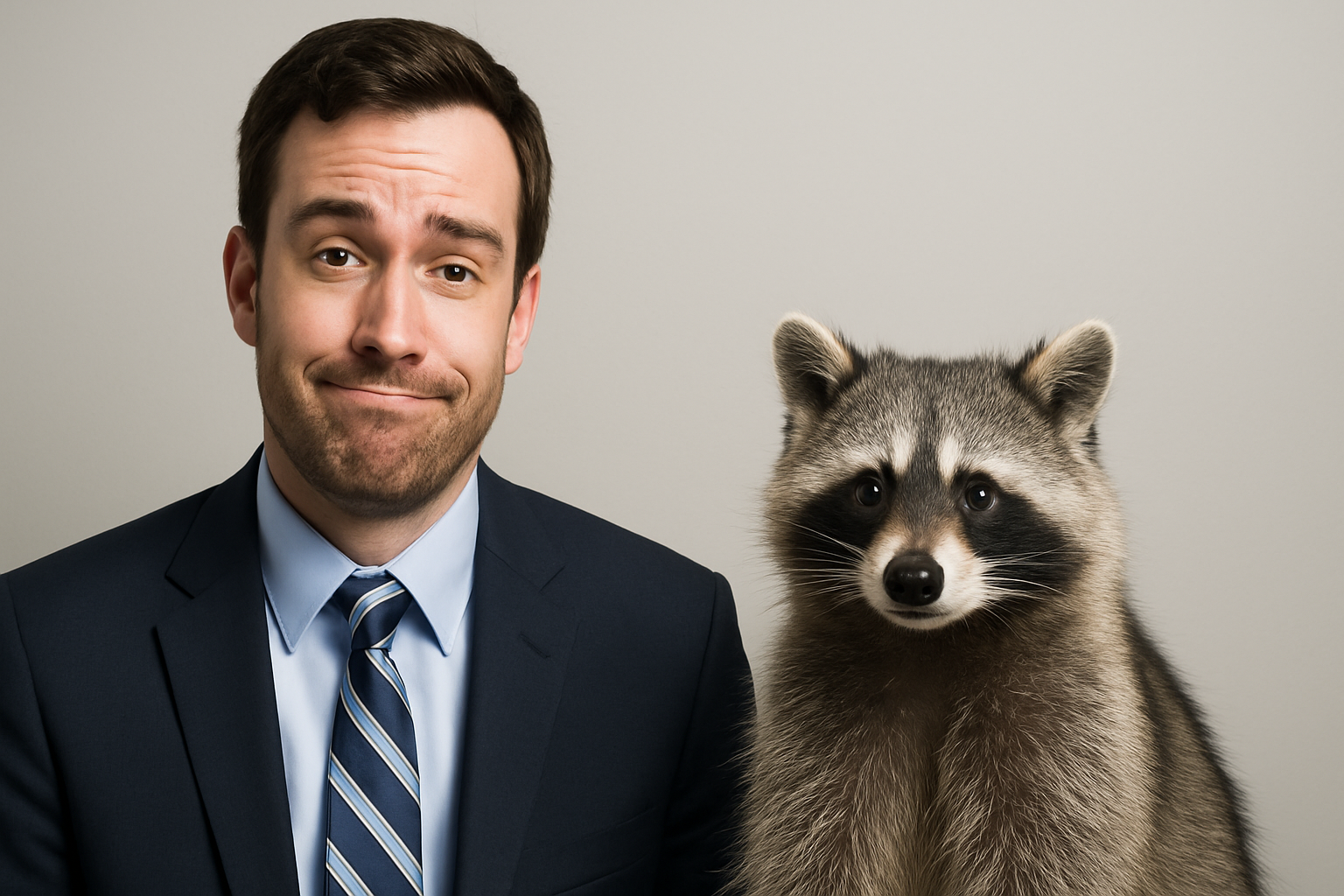
Because instead of giving them a polished, corporate-approved answer filled with buzzwords and vague confidence, my brain decided this was the perfect moment to introduce a raccoon.
The Moment I Chose the Raccoon and Committed Fully
Here’s the thing about raccoons. You don’t choose them. They appear when you least expect it, usually when you’re tired, unsupervised, and trying to survive. Much like job seekers. Much like employees. Much like me, staring into a grid of executives on Zoom.
So I started talking.
I explained that a raccoon isn’t the strongest animal. It’s not the fastest. It doesn’t have a five-year plan or a mission statement. What it does have is adaptability, persistence, and an unsettling ability to solve problems using whatever is available at the moment.
I watched faces carefully. Some nodded. Some blinked slowly. One person leaned closer to their screen like they were trying to figure out if this was a metaphor or a cry for help.
I kept going, because once you bring a raccoon into a panel interview, you cannot stop halfway. That’s how people end up in HR training videos.
I talked about how raccoons don’t panic when the path is blocked. They improvise. They climb. They dig. They try again. And yes, sometimes they make a mess, but they always figure it out. They survive systems that were not designed for them.
At this point, I was aware of two things. First, I was absolutely not giving the answer they expected. Second, no one had interrupted me. Which meant I was either doing great or being studied.
The Panel’s Reactions, Ranked From Encouraging to Deeply Concerning
Panel interviews are fascinating because you can watch reactions in real time. On Zoom, they are unavoidable. Every raised eyebrow. Every frozen smile. Every aggressive nod.
One person smiled. That was good. Smiles are promising.
Another nodded slowly, like someone who had just decided to trust the process even though they didn’t fully understand it.
Someone else tilted their head, the universal sign for “I did not expect wildlife to enter this conversation.”
There was a moment of silence after I finished. Not a bad silence. Not a “we’ve lost control of this interview” silence. Just enough time for everyone to process the fact that they were now evaluating a candidate who had confidently compared themselves to a raccoon.
Then came the follow-up questions. These are critical. Follow-ups mean curiosity. Or concern.
They asked how the metaphor translated to cross-functional collaboration. I explained that raccoons don’t work alone when they don’t have to. They observe, adapt, and learn patterns. They figure out systems quickly. They thrive in chaos without pretending chaos is comfortable.
Someone actually laughed. Out loud. On purpose.
That’s when I knew one of two things was happening. Either I had completely bombed and become a story they would tell for years, or I had accidentally differentiated myself in a way no résumé ever could.
The Aftermath — When You Log Off and Immediately Question Every Life Choice
When the interview ended, I smiled, thanked everyone for their time, and clicked “Leave Meeting” with the calm confidence of someone who absolutely did not have a raccoon-shaped adrenaline spike coursing through their veins.
Then I stared at my own reflection in the black Zoom screen.
Did I really just do that?
I replayed every second. The introduction. The metaphor. The nods. The silence. The laughter. I wondered if I should’ve played it safer. If I should’ve stuck to leadership frameworks and strategic alignment. If bringing a raccoon into a corporate conversation was brave or reckless.
But here’s the thing. The question wasn’t really about animals. It was about authenticity. About how you think. About how you navigate systems that are messy, imperfect, and often illogical.
Anyone can memorize answers. Not everyone can show how their brain works under pressure.
If nothing else, I gave them a real answer. One they would remember. One that didn’t sound like it came from the same interview guide everyone else uses.
Final Thoughts: If You’re Going to Be Remembered, You Might as Well Be Honest
I don’t know if the raccoon metaphor got me the job. Maybe it did. Maybe it didn’t. But I do know this: they will remember that interview.
In a world full of candidates saying the same polished things, sometimes the most professional move is being real. Thoughtful. Human. Slightly unconventional.
And if explaining your leadership style means invoking a raccoon — an underestimated, resilient, resourceful creature that survives against the odds — then maybe that says more about you than any buzzword ever could.
Worst case? You become a legend in their internal Slack.
Best case? You get hired by people who appreciate that sometimes, the raccoon really does know what it’s doing.






Can you be more specific about the content of your article? After reading it, I still have some doubts. Hope you can help me.