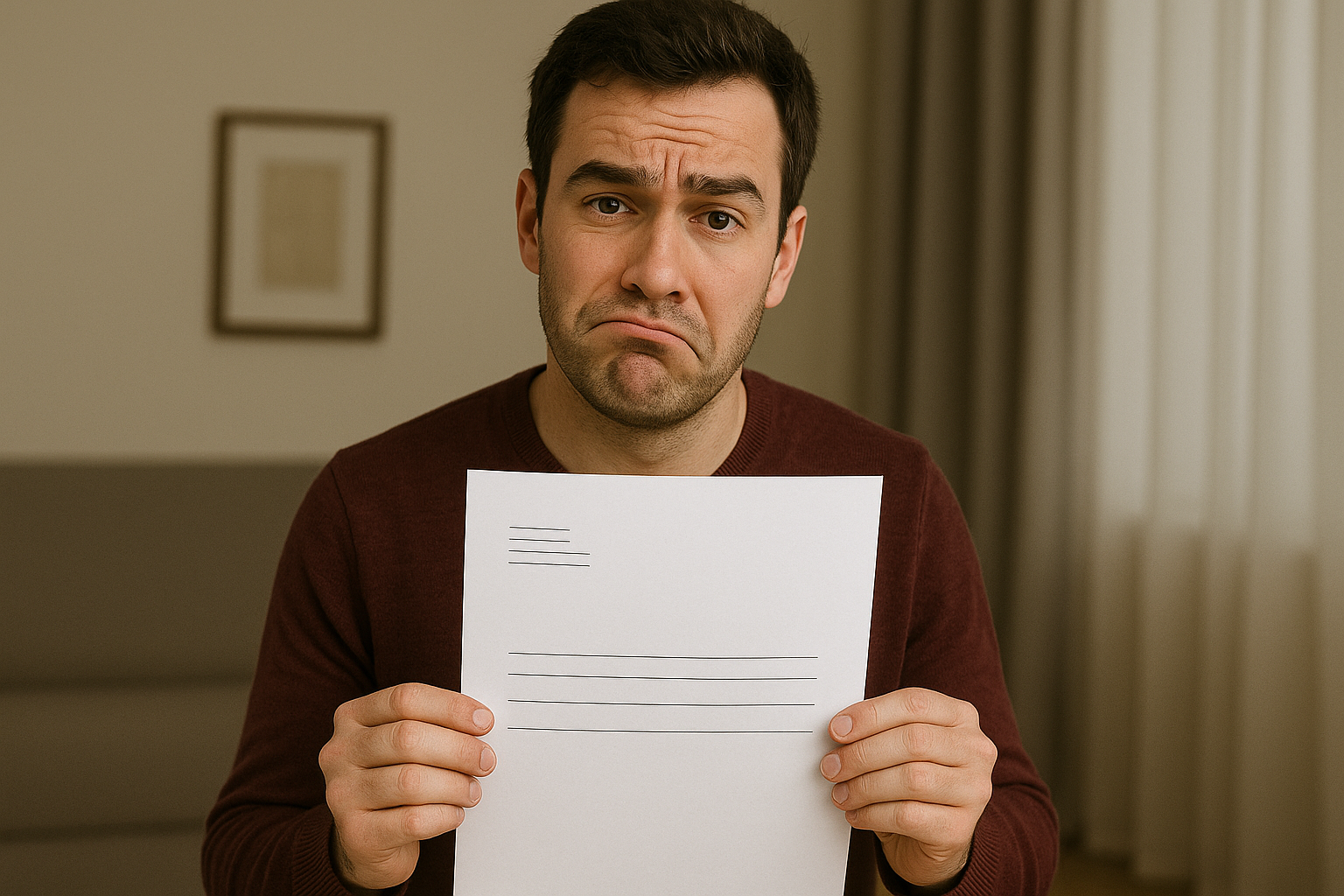
Every cover letter begins the same way — with optimism, delusion, and Microsoft Word’s judgmental little blinking cursor daring you to sound employable. You open a blank document and tell yourself this time will be different. This time, you’ll find just the right blend of professional charm and humble confidence. This time, someone might actually read it.
Spoiler: they won’t.
The cover letter is the great unrequited romance of modern employment — a love letter addressed to no one in particular, sent into the digital void where it will never be opened, never be cherished, and never even make it past the cold heart of the Applicant Tracking System. You write it anyway, because every job application portal swears it’s “optional” but somehow turns red and angry if you skip it.
So, you do what desperate people do: you perform emotional labor for free. You pour your personality, your story, your essence into three neatly formatted paragraphs that will likely be skimmed (if you’re lucky) by a caffeine-deficient recruiter with a tab open for Amazon, Slack, and the concept of escape.
“Dear Hiring Manager,” you begin, like a child writing to Santa — hopeful, trembling, delusional. You profess your admiration for a company you discovered ten minutes ago, whose values you learned about while half-asleep on Indeed. You pretend you’ve always dreamed of working there, when in reality, your only dream is paid time off and dental coverage.
Still, you try to sound genuine. You mention your “passion for excellence” and your “commitment to growth,” neither of which have been seen in your personal life since 2017. You say you “believe in collaboration,” even though you’ve been in enough team meetings to know that’s corporate code for “we blame everyone equally.”
You proofread it five times, delete one comma, then stare at the screen and whisper: this is my magnum opus. Then you click “Submit.”
And like a message in a bottle cast into the ocean, your masterpiece disappears into the dark.
Dear Hiring Manager, Whoever You Are
There’s something beautiful and tragic about the first line of a cover letter. Dear Hiring Manager — a greeting to a faceless deity of employment, an offering to the algorithmic gods. You know there’s no “manager” reading this, only a software program trained to detect whether you’ve used the right synonyms for “team player.” But still, you cling to ritual. You type it out, pretending there’s a kind soul on the other side who will see your words and whisper, “Finally, the one.”
You move on to the introduction — that carefully balanced cocktail of confidence and desperation. You’re supposed to “hook the reader,” but the reader doesn’t exist. So instead, you hook yourself. You write sentences like, “I was thrilled to see your opening for a Customer Success Specialist,” which is a lie — the only thing you felt was mild nausea and a faint glimmer of capitalism-induced hope.
You go on to describe how you’ve “long admired” the company’s commitment to innovation, even though you only learned of their existence when LinkedIn recommended the job after noticing your recent search history: “how to fake confidence during unemployment.”
Then comes your favorite part: connecting your random life experiences to their impossible job description. They want someone with “10+ years of experience in leadership, data science, graphic design, and telepathy.” You have two years at a coffee shop and a certificate you printed yourself from Coursera. So you improvise. You spin your barista experience into “managing multi-channel customer relationships under high-pressure conditions.” You describe latte art as “a creative approach to customer engagement through visual design.” You almost convince yourself you’re qualified. Almost.
The first paragraph ends, and you sit back for a moment. You take a sip of your fifth coffee. You feel proud — not because you nailed it, but because you somehow made “survival” sound like “strategy.”
The Middle Paragraph — Where Dreams Go to Die
Ah yes, the middle paragraph — the professional graveyard where optimism and creativity go to die slow, jargon-filled deaths. This is where you’re supposed to “align your skills” with the job requirements, but instead, you end up writing a eulogy for your self-respect.
You start strong: “In my previous role, I successfully led a cross-functional team to drive measurable results.” Translation: “I survived a group project that ended in chaos.” You mention how you “implemented new workflows,” which is corporate code for “I color-coded a spreadsheet once.”
You use the word “collaborated” a record number of times, because that’s what everyone on LinkedIn says good employees do. You talk about “stakeholders,” even though the only stakeholders you’ve ever interacted with were the ones ordering medium rare at Applebee’s.
Then, in a fit of insecurity, you start adding action verbs like confetti: orchestrated, streamlined, accelerated, synergized. You’re not sure what half of them mean, but you’ve read enough job postings to know that verbs are how you signal competence. It’s like sprinkling parsley on a microwaved meal — it doesn’t fix anything, but it looks like you tried.
Somewhere along the way, you remember the career coach who told you to “show, not tell.” So you add an example:
“At my last job, I increased customer engagement by 27%.”
You don’t mention that the “engagement” was just a post that accidentally went viral because of a typo.
Still, you keep going, because quitting mid-letter feels like failure. You paste your achievements, twist your insecurities into buzzwords, and polish every sentence until it gleams with artificial confidence. You feel less like a human and more like a LinkedIn chatbot trying to get promoted.
And in that moment, as you sit there rewording “team player” for the fourth time, you realize the truth: cover letters aren’t written for people — they’re written for corporate theater. You’re performing a script no one attends, reciting lines that sound impressive but mean nothing.
The Grand Finale — Sincerely, The Desperate
At last, the end. The final paragraph — your Hail Mary to the employment gods. You know no one will read this far, but you write it anyway, because hope dies last.
You thank them for “considering your application.” You know they won’t. You express your “excitement about the opportunity to contribute to your team.” You’re not excited — you’re exhausted. You promise to “follow up in two weeks,” even though you’ll spend that time refreshing your inbox and wondering if Indeed has a grief counseling hotline.
You reread your letter one last time. It’s poetic, tragic, absurdly professional. You imagine some mythical recruiter printing it out, highlighting your clever phrasing, and saying, “This one stands out.” But deep down, you know the truth: it will be filtered, flagged, and filed away in the same digital graveyard as every other “passionate self-starter.”
And yet, despite it all — despite the rejection emails, the ghosting, the endless applications — you’ll do it again tomorrow. You’ll write another letter to another stranger, pretending your soul still believes in corporate romance. Because somewhere beneath the sarcasm, there’s still that flicker of hope that one day, someone might actually read your words and think, Yes. Let’s give them a chance.
But until then, you’ll keep writing these unrequited love letters to capitalism.
Because even in the age of automation, there’s still no template for hope.
😂0😍0😢0😡0👍0👎0