
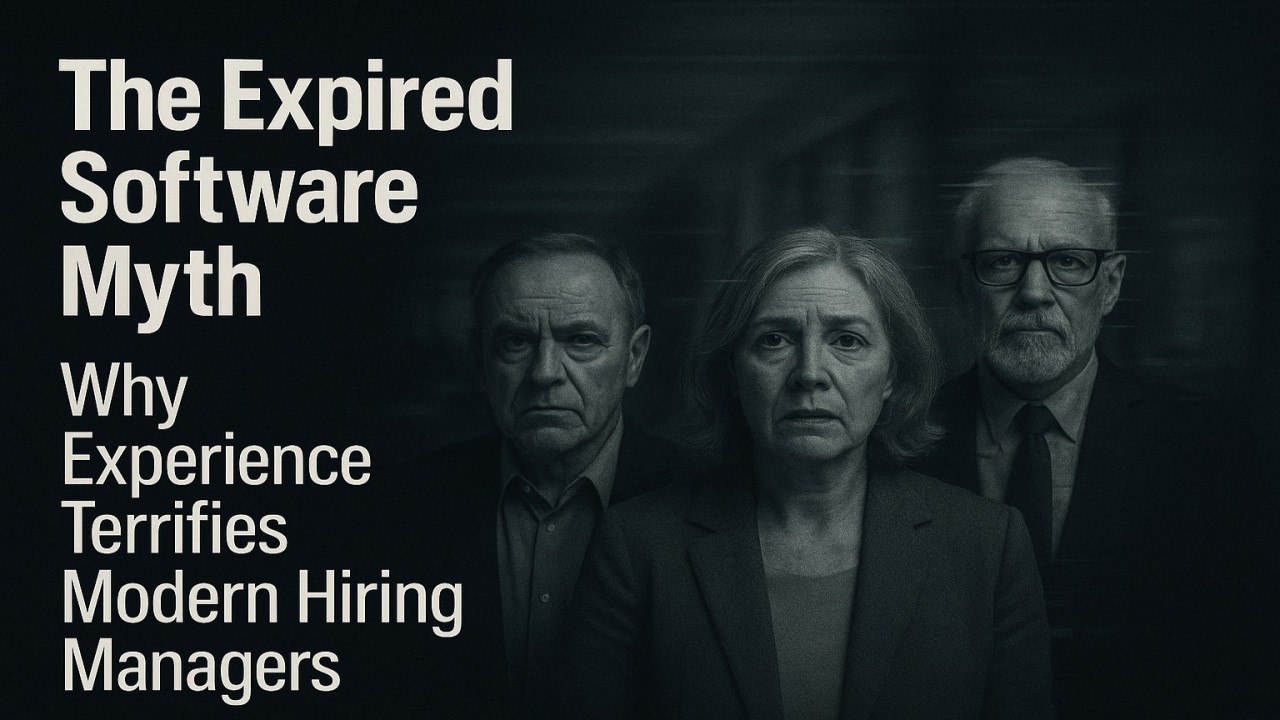
Once upon a time, experience was everything. It was the currency that built cities, stabilized economies, and mentored generations. People wore their years like medals, proof that they’d survived the chaos and learned how to navigate it with grace. You didn’t have to justify your relevance; it was self evident in your work.
But somewhere along the way, somewhere between the rise of startup culture and the fall of common sense, the world decided that age was an error message. Suddenly, being “seasoned” became a liability, not a legacy. Recruiters began treating resumes like time bombs, nervous to open anything that might contain a hint of 1990s experience.
It’s a strange paradox: in a world that claims to prize wisdom, patience, and leadership, the people who embody those qualities are being quietly written out of the story. You can build a company from the ground up, lead teams through recessions, negotiate contracts before email existed, and still be told, “We’re looking for someone more aligned with the current culture.”
Translation: We’re looking for someone cheaper, easier to impress, and unlikely to notice how many red flags we’ve painted beige.
You see it every day, the 55 year old sales director applying for entry level roles just to stay in the game. The 48 year old operations manager told to “dumb down” their resume. The 63 year old consultant ghosted after a final interview because the company realized he might actually ask tough questions.
This isn’t a story about age; it’s a story about amnesia. Corporate amnesia. A refusal to remember who built the foundations everyone else is now standing on. The same professionals who introduced the first automation systems, created the original training manuals, built loyal customer bases, and nurtured teams that actually stayed longer than a fiscal quarter, these are the ones now being told they’re “not a cultural fit.”
But culture without wisdom collapses. And when the Wi-Fi crashes, when the spreadsheet breaks, when leadership panics, who do they call? The very people they once decided were “past their prime.”
So, no. You’re not outdated. The system is. And it’s high time we call it what it is, not a talent shortage, but a wisdom blind spot that’s costing organizations far more than they realize.
The Cult of Youth and the Fear of Depth
Let’s start with the uncomfortable truth: companies don’t actually fear obsolescence, they fear mirrors. Experienced professionals are mirrors. They reflect what leadership lacks, what organizations pretend to understand, and what buzzwords can’t replace.
That’s why the hiring world has fallen in love with youth. It’s not because youth is better, it’s because it’s easier to manage. Fresh graduates don’t question outdated strategies. They don’t recognize dysfunctional leadership when they see it. They’re too busy trying to prove themselves to notice the emperor isn’t wearing a KPI.
So job postings grow increasingly absurd. “Looking for a marketing expert with 2–4 years of experience, must be an innovator, visionary, strategic thinker, and also willing to accept an entry level salary.” Translation: We want someone brilliant, but naïve enough to settle for crumbs.
Meanwhile, the candidates with twenty, thirty, or forty years of depth are dismissed for being “overqualified.” Which is corporate code for: You might not tolerate nonsense, and that terrifies us.
The cult of youth thrives on energy, speed, and aesthetics. It glamorizes burnout as “drive” and inexperience as “fresh perspective.” But experience brings something youth can’t manufacture, pattern recognition. The ability to see the iceberg before it hits the hull. The wisdom to say, “We tried that in 2003, and it didn’t work then either.”
And that’s precisely the problem. Because while the new guard is busy reinventing the wheel for the seventh time, the veterans are quietly watching, coffee in hand, thinking, We could’ve told you that for free.
Experience isn’t resistance to change, it’s discernment. But in a corporate world addicted to novelty, discernment looks like defiance. And defiance doesn’t trend well on LinkedIn.
Ghosting the Elders: How Silence Became Corporate Policy
There’s something almost poetic about the modern rejection email. It’s short, polite, algorithmically indifferent. “We were impressed by your experience,” it says, “but we’ve decided to move forward with other candidates.”
What it really means is: You reminded us of accountability, and we can’t have that energy in the building.
This is the new corporate ghost story. The candidates with the deepest knowledge, the best references, and the longest track records vanish into the void. They’re ghosted by recruiters who were in kindergarten when those candidates were leading million dollar projects. They’re ignored not because they lack skill, but because they have too much context.
And companies have grown dependent on that silence. Ghosting isn’t negligence, it’s convenience. It allows hiring teams to avoid explaining why they chose someone half the age, half the salary, and one third the patience. It’s the modern way of saying, “You’re right for the job, but wrong for the narrative we’re trying to sell.”
Because hiring today isn’t about building teams, it’s about building optics. It’s about the illusion of innovation, not the practice of it. A thirty year veteran doesn’t fit the photo collage of beanbags, latte art, and neon “Do What You Love” signs. They ruin the aesthetic of “hustle culture” by actually knowing what they’re doing.
But here’s the irony: when the project collapses, when the strategy fails, when the “disruptive” idea backfires, those same companies call the very people they ghosted, offering consulting gigs at triple the rate. Suddenly, experience becomes fashionable again when chaos enters the chat.
So maybe it’s not that companies don’t value experience, they just don’t value it until it’s too late.
The Renaissance of Relevance
The comeback is already happening, you just have to look for it. It’s in the consultants being rehired to fix what the “new blood” broke. It’s in the small businesses thriving because they’re led by people who remember that customer service used to mean answering the phone, not redirecting to a chatbot. It’s in the seasoned professionals turning rejection into reinvention, launching their own ventures, mentoring others, and reminding the world that wisdom doesn’t retire; it reinvents itself.
The modern economy desperately needs what experience brings: context, foresight, and calm under pressure. You can’t download that. You can’t automate it. You can’t fake it in a TED Talk. It’s earned the hard way, through layoffs survived, mistakes corrected, and decades of choosing integrity over image.
The professionals in their 40s, 50s, and 60s aren’t outdated, they’re the human firewalls keeping organizations from self destructing. They’ve seen enough failure to recognize it early. They’ve navigated enough chaos to lead with composure. They don’t need hype; they need purpose.
So if you’re reading this and wondering whether the world still sees you, it does. The noise just got louder. You’re not irrelevant, you’re refined. You’ve already lived through every corporate reinvention the “future of work” is currently overhyping.
And to the companies still clinging to the myth that youth equals innovation, understand this: innovation without memory is chaos. You can’t build the future by erasing the past. You can’t create progress while ghosting the people who’ve already built it once.
Final Note – You’re Not Outdated. You’re the Update.
So, no—you’re not too old. You’re too proven. Too unshakable. Too aware of what truly matters. You’ve mastered the ability to separate noise from necessity, ego from execution, urgency from importance. You’ve lived through enough corporate “reinventions” to know that most of them are just old ideas wearing new buzzwords. You’ve seen the cycle—chaos, correction, calm—repeat itself a dozen times, and you’ve learned how to move through it with composure instead of panic.
You’re not outdated, you’re the upgrade no one thought to install. You bring context to confusion, calm to crisis, and clarity to conversations that have forgotten what real leadership sounds like. While others chase “best practices,” you embody earned instincts. While new hires try to impress with jargon, you impress by solving problems that haven’t even been fully explained yet. You’ve been the glue that kept teams together, the steady hand when others froze, and the quiet mentor behind victories that rarely made it into the newsletter.
The system may have convinced itself that experience is expendable, but every spreadsheet, every project, and every crisis still tells the truth: the people who know how to lead quietly, think clearly, and act wisely are the only ones holding the line between chaos and collapse. You’re not a relic, you’re the architecture. The foundation beneath the flashy rebrands and quarterly resets. You’re what’s left when the slogans fade and the reality of work returns.
And one day, when the storm hits again, as it always does—the world will come knocking on your door. Because wisdom doesn’t expire; it endures. It’s not loud. It’s not trending. But it’s always there, waiting for the moment when the noise runs out and someone finally says, “We need stability.” And when that happens, it’ll be you they call. Because experience doesn’t just fill the gaps, it rebuilds the entire foundation, stronger, steadier, and wiser than before.