
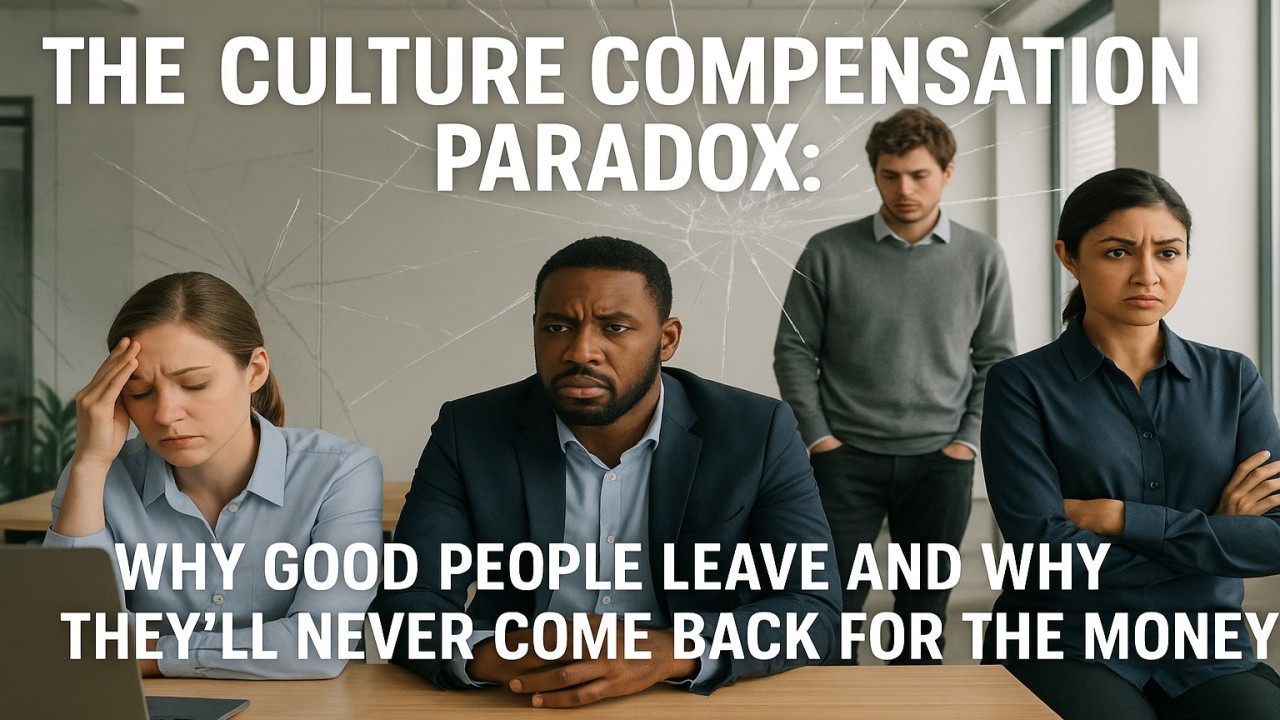
It usually starts quietly. Not with a dramatic outburst or a slammed laptop, but with something subtle — a sigh after a meeting, a pause before clicking “Join,” a silence in a once spirited group chat.
You begin to notice small shifts in yourself. The morning routine that once felt purposeful now feels heavy. The motivational playlist you used to blast on your commute now sounds like background noise for a movie you’ve already seen too many times. And the phrase “We’re a family here” starts to ring less like a promise and more like a warning.
You tell yourself it’s just burnout. Everyone gets tired. Every job has its hard seasons. Maybe you just need a weekend off, a vacation, a reset. But the feeling lingers, that quiet sense that something deeper is off. That you’ve stopped being part of something and started being used by something.
You look around the office or the Slack channel, or the Teams call and realize that everyone’s smiling, but nobody’s happy. The culture that once felt electric now feels like static. The same phrases get recycled: “Let’s stay positive.” “We’re all in this together.” “It’s just a busy season.” But somehow, that season never ends.
Then comes the real moment, the one that doesn’t make it into exit interviews or HR reports. It’s when you stop caring about winning. You stop volunteering ideas. You stop defending what should matter. Because the truth is, culture doesn’t die overnight, it erodes one ignored voice at a time.
And when that erosion becomes too loud to ignore, you leave. Not because of money, not because of a better title, but because you can’t keep pretending that “good vibes” are a substitute for good leadership.
Here’s the paradox: an employee who leaves for money can be won back with meaning. But one who leaves because of a broken culture? They’re gone forever. Because once someone learns what respect feels like, they’ll never return to a place that confused control for leadership.
Culture isn’t a ping pong table or a wellness newsletter. It’s how people feel at 4:58 p.m. on a Friday when they see their manager’s name pop up in their inbox. It’s the tone of the conversation after someone makes a mistake. It’s the difference between being led and being managed.
And no matter how many HR campaigns, all-hands meetings, or “appreciation weeks” you throw at it, there’s one truth every organization eventually learns: you can’t pay people to forget how you made them feel.
The “We’re Like Family” Lie — The Most Profitable Delusion in Corporate History
There’s no phrase more dangerous than “we’re like family.” It sounds warm, inclusive, reassuring, until you realize that, like most families, it comes with guilt, gaslighting, and unresolved trauma.
At first, you believe it. You’re encouraged to “bring your whole self to work.” There are birthday cupcakes, Slack emojis, and company hoodies that feel almost sentimental. But over time, the cracks show. The same people who call you “family” start avoiding eye contact when layoffs happen. The ones who preach “teamwork” are suddenly measuring your worth in spreadsheets and smile consistency.
The “family” illusion works because it preys on something deeply human, the need to belong. But in corporate culture, belonging often becomes a weapon. You’re told to care like an owner, to sacrifice like a founder, to “go the extra mile” because that’s what family does. Except this isn’t a family. It’s a business. And the unspoken contract is simple: your loyalty will always outlast their gratitude.
Inside these “families,” accountability morphs into politics. Honesty becomes a career risk. Everyone is “collaborating,” but no one’s truly communicating. The culture becomes a masquerade ball — smiles on, exhaustion underneath.
And when someone finally breaks the illusion, when they dare to say, “This isn’t working” they’re branded “negative.” Because in toxic cultures, honesty is rebellion.
These companies love to talk about retention. They hold meetings to ask, “Why are people leaving?” But they never ask the harder question: “Why are they staying silent before they leave?” The answer is simple, because the culture doesn’t punish bad behavior; it promotes it. It rewards compliance over courage. It celebrates those who nod, not those who notice.
So yes, people eventually leave. But not because of one bad day or one difficult boss. They leave because they finally realize the truth: this “family” only calls when they need something.
The Paycheck Mirage — Why Raises Can’t Buy Redemption
When someone quits, leadership often acts shocked — “We didn’t see this coming!” That’s because they were too busy analyzing data to notice people.
They’ll pull up dashboards, exit survey stats, and attrition reports like forensic scientists at a crime scene. Then someone says it: “They got a better offer.” And everyone nods, relieved. Because that’s the narrative that keeps the mirror clean.
But here’s what that spreadsheet doesn’t capture — the months of invisible frustration. The team meetings that felt like therapy sessions no one was allowed to finish. The projects that died in bureaucracy. The manager who said, “You’re lucky to have this job.”
You don’t quit for money. You quit when your job starts costing you peace.
And yet, the corporate reflex is always the same: throw money at the wound and call it healing. “What if we match their offer?” “What if we promote them?” “What if we give them more responsibility?”
More responsibility — the world’s most ironic retention strategy.
But money can’t fix what culture breaks. You can double a paycheck, but it won’t erase a manager’s disrespect. You can add bonuses, but you can’t add empathy. You can build equity packages, but you can’t buy integrity.
The companies that “counteroffer” after someone resigns never ask themselves why it took a goodbye letter to start valuing a person. They mistake urgency for care. But appreciation that only appears at the exit interview isn’t appreciation — it’s panic in a PowerPoint.
Money attracts, but meaning retains. And once someone’s had a taste of autonomy, trust, and genuine leadership, no number can convince them to re-enter the emotional hunger games of a bad culture.
The Exodus Effect — How Good People Leaving Exposes Bad Leadership
Every toxic culture believes it’s healthy until the best people leave. Then the denial begins.
At first, it’s calm: “We wish them the best.” Then it’s defensive: “They weren’t the right fit anyway.” Then it’s delusional: “Our culture is still strong.”
But everyone inside knows the truth, the energy has changed. The silence is heavier. The laughter feels staged. And the people who are left behind start updating their résumés in private tabs.
You can always tell when a company’s culture is dying, the meetings get longer, the emails get vaguer, and leadership starts quoting motivational authors they don’t understand. The phrase “We’re all in this together” becomes a hollow battle cry for people who’ve already emotionally checked out.
The saddest part? Most toxic cultures don’t collapse. They calcify. They survive through denial. They promote the loudest voices, ignore the most capable ones, and convince themselves that loyalty and silence are the same thing.
But every departure is a message. Every resignation letter is a mirror. And if leadership refuses to look, the exodus continues until the only people left are the ones who can’t leave, or the ones who stopped caring.
Meanwhile, the person who left? They’re thriving. Sleeping better. Laughing again. Rediscovering what it feels like to contribute without fear. They’re building, learning, and breathing freely, a luxury that money alone could never buy.
And when their old company calls to say, “We’d love to have you back,” they smile politely and say what every scarred soul eventually learns to say: “Thank you — but I’ve moved on.”
The True Cost of Culture
Companies love to measure turnover, but they rarely measure trust. They calculate revenue per employee but never calculate the emotional debt they owe to the people who kept things running long after hope ran out, the ones who stayed late, carried the team, and covered the cracks that leadership pretended not to see.
They’ll make dashboards for efficiency and charts for engagement, yet they’ll never build a metric for quiet loyalty, the kind that can’t be quantified but can be felt in every sigh, every unread message, every burnt-out goodbye. You can automate productivity, but you can’t automate belief. And when belief dies, culture dies with it.
Because culture is not a poster. It’s not a speech. It’s not a “value” printed in italics on the breakroom wall. Culture is the residue of every decision made when nobody’s watching. It’s the memory people carry after they leave, how it felt to be there, to try, to speak, to care, to be dismissed, to be unheard, to give your best and realize the system was built to drain it.
If they left for money, you might win them back. But if they left for peace, they’re never coming home. Because peace isn’t a perk. It’s the aftertaste of dignity. It’s the rare moment when someone realizes they don’t have to apologize for needing balance, for wanting boundaries, for refusing to bleed for someone else’s quarterly goals.
And once someone discovers what it feels like to be valued instead of managed, trusted instead of monitored, respected instead of retained, no paycheck on Earth will ever be enough to make them stay small again. They’ve seen what freedom feels like, and that memory doesn’t fade. It follows them like sunlight through a window they never thought they’d open.
Because the truth is, people don’t quit companies, they quit atmospheres. They quit the anxiety that greets them every morning and the silence that meets them every night. They quit pretending to care about leadership slogans that were never meant for them.
You can’t build loyalty with ping pong tables or pizza Fridays. You build it with honesty, empathy, and the courage to ask: What does it actually feel like to work here?
Until leaders start measuring that, they’ll keep wondering why their “best people” leave and why they never, ever come back.






Your article helped me a lot, is there any more related content? Thanks!