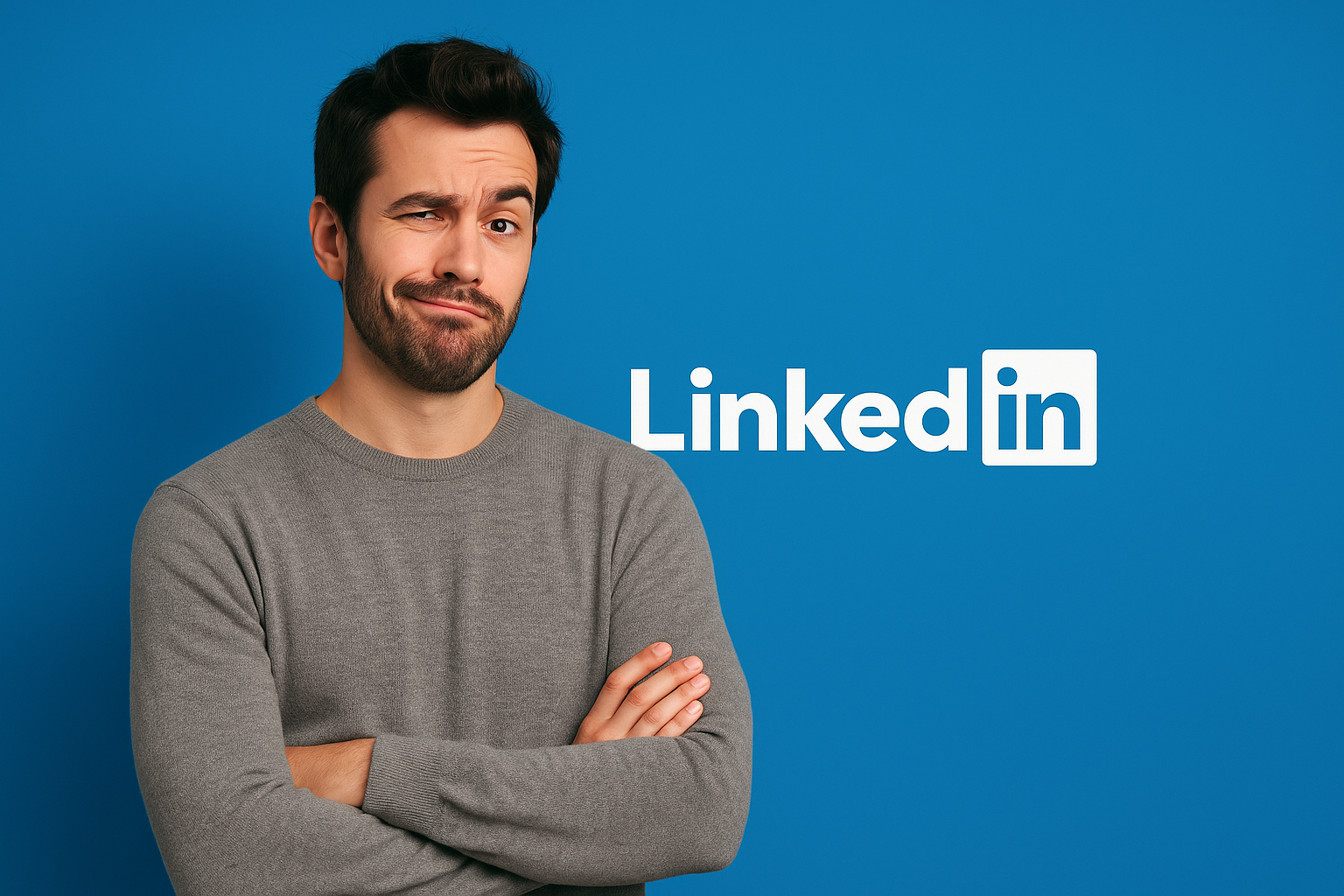
It always begins on an ordinary weekday — the kind of morning when your coffee tastes burnt, your optimism is thin, and you’re half-proud of a sarcastic post about corporate jargon. Then the notification arrives like a digital thunderbolt:
“Your account has been temporarily restricted for violating our Professional Community Guidelines.”
You stare at the message, unsure whether to laugh or panic. You didn’t post anything scandalous. You didn’t start a riot in the comment section. You just made a light joke about “team-building exercises” being modern psychological experiments. But the algorithm — that faceless, humorless enforcer — has decided that your tone was too real for comfort.
You click Appeal Decision with the confidence of someone who still believes in fairness. After all, this is LinkedIn — the sacred home of “authentic professionals,” daily affirmations disguised as leadership lessons, and people who post inspirational stories that begin with “When I was nine years old, I learned about resilience from a stapler.” Surely, there must be room for honesty.
But as the minutes turn into hours, you realize something horrifying: you’re locked out. You can’t post, comment, or message. Your profile picture has turned gray, like a digital headstone marking your brief existence in the land of endorsements and humblebrags.
You’ve officially entered LinkedIn Limbo — a place where networking dreams go to die quietly while compliance bots quote the Terms of Service in binary.
The Crime You Didn’t Know You Committed
No one tells you what you actually did wrong. The email is vague, sterile, and written like a rejection letter from a robot. You “violated our Professional Community Guidelines.” Which ones? You scroll through the fine print like a lawyer cramming for trial. Apparently, your crime could be anything from “harassment” to “unconstructive criticism of a corporate narrative.”
You try to retrace your steps. Was it the post about recruiters ghosting candidates faster than dating apps? The satire about companies calling layoffs “strategic alignment”? Or the comment you left under a viral post that read, “Maybe authenticity shouldn’t require a hashtag”?
You scroll through your feed like a detective in a trench coat, reviewing evidence. Every post looks harmless — unless, of course, you’re an algorithm trained to fear sarcasm. You begin to realize that your sense of humor is illegal here. This is a platform where irony is contraband, and everyone’s profile photo must radiate compliance.
You imagine the moderation process: a team of bots sitting around a virtual table, analyzing your post with grave seriousness. “Tone: 76% sarcasm. Risk: elevated. Human detected. Remove immediately.”
You want to argue your case, but there’s no courtroom. Just a form. A box. A single text field where your wit must now transform into a plea for mercy.
The Appeal — Begging a Robot for Redemption
You open the appeal form, and suddenly, your entire career hinges on 500 characters or less. You type with the desperation of someone trying to reason with a vending machine that stole their dollar.
“Dear LinkedIn Compliance Team,
My post was intended as satire, not offense. I have great respect for this community and simply wanted to start a meaningful conversation. I sincerely apologize if my tone was misinterpreted. Please review my account and restore access. I promise to remain both professional and mildly entertaining.”
You hit submit and exhale. You feel like you’ve just sent a message in a bottle into a corporate ocean. Somewhere, a server in California receives your plea, blinks once, and adds it to a pile marked “Maybe Later.”
Days pass. Nothing happens. You refresh your inbox compulsively. The only new messages are LinkedIn newsletters reminding you to “keep building your professional brand” — a cruel joke when you currently don’t have one.
Then it comes. A reply.
“After careful review, we’ve determined your account will remain restricted.”
No explanation. No signature. Not even a name. Just cold indifference delivered by a faceless system.
You read it again, hoping for a hidden clue. Nothing. You imagine your appeal being read by an AI named “Karen-3000,” programmed to detect “negative vibes” and delete without remorse. You try a follow-up email. It bounces. You try messaging LinkedIn Help on X (formerly Twitter). They tell you to “check your email.” You check again. Still the same line of digital apathy.
At this point, you begin to wonder if your account isn’t just restricted — maybe it’s buried in the algorithmic afterlife, sitting beside thousands of other fallen professionals who dared to tell a joke.
Rebirth in the Age of Digital Bureaucracy
Weeks later, you hit acceptance. Not peace, exactly, but resignation wrapped in caffeine and sarcasm. You go through the five stages of LinkedIn grief.
Denial: It’s a mistake. They’ll fix it soon.
Anger: So “grindset gurus” can post selfies with Ferraris, but I can’t make one joke about corporate hypocrisy?
Bargaining: Maybe if I delete every meme, they’ll love me again.
Depression: What’s the point of professional growth if I can’t brag about it online?
Acceptance: Fine. Time for a comeback.
You create a new profile — reborn, rebranded, and slightly unhinged. Your headline now reads, “Banned Once. Sarcastic Forever.” You start from scratch, cautiously posting again. You test the limits. You trade punchlines for metaphors, jokes for “observations.” You become fluent in the corporate dialect — polite enough to survive, clever enough to stay interesting.
And just when you think you’re blending in, one of your new posts goes viral. Thousands of reactions. Hundreds of comments. The irony? It’s a reworded version of the very post that got you banned. This time, everyone loves it. People call it “insightful.” Influencers share it. A CEO comments, “Brilliant perspective.”
You stare at your screen and laugh. The system didn’t teach you professionalism — it taught you strategy. You’ve learned to package rebellion in polite fonts.
Epilogue: The Lesson Behind the Lockout
The great irony of the LinkedIn appeals process is that it mirrors corporate life perfectly. You follow the rules, perform sincerity, and hope someone in power sees your potential. But when you’re too honest — too human — the system politely silences you.
You realize that “Professional Community Guidelines” are less about protecting people and more about preserving the illusion of perfection. On LinkedIn, there’s no room for nuance. You’re either a success story or a warning label.
And yet, the appeal wasn’t a total loss. It taught you something invaluable: that humor is resistance, truth is rebellion, and the only thing more powerful than a platform is the persistence to outgrow it.
So you keep posting. You keep writing. You keep laughing — because deep down, you know that the most dangerous thing a professional can be is real.
And if the algorithm can’t handle that, well… you’ll see it in appeals court.






Can you be more specific about the content of your article? After reading it, I still have some doubts. Hope you can help me.
Your point of view caught my eye and was very interesting. Thanks. I have a question for you. https://www.binance.bh/futures/ref?code=MBLCVVZG