
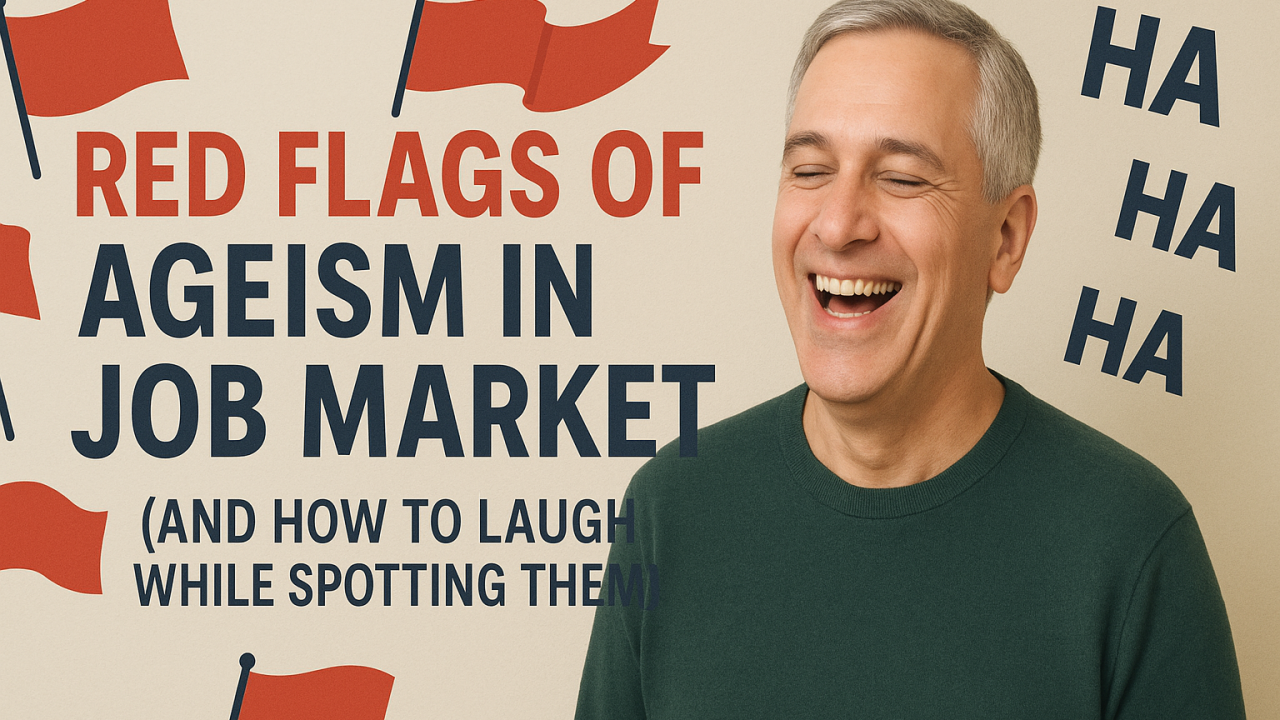
There are certain moments in life when you realize the playing field isn’t level. Sometimes it’s small, like when you find out the Monopoly banker has been quietly skimming $500 bills the whole game. Sometimes it’s bigger, like realizing your boss’s “open door policy” is more like an “open door trap.” But perhaps the most jarring moment comes when you re-enter the job market after a few decades of hard won experience and suddenly discover the silent wall no one warned you about: ageism.
You notice it in the whispers first. The career blogs that say things like “refresh your look for interviews” (translation: stop aging). The networking events where people ask, “So, when are you thinking of retiring?” before you even finish your appetizer. Or the recruiter who scans your resume, sees the graduation date, and suddenly looks at you like you’ve just confessed to remembering Blockbuster’s Friday night crowds.
It’s not that you’re unqualified, in fact, you’re probably more qualified than half the panel interviewing you. You’ve survived recessions, mergers, hostile takeovers, office gossip wars, broken printers, IT crashes, and more awkward company holiday parties than you can count. You’ve seen trends rise and die: fax machines, Blackberries, beanbag chair offices, standing desks, kombucha taps in the breakroom. You know the one universal truth about corporate life: whatever’s shiny today will be obsolete tomorrow.
And yet, in interviews, you’re suddenly not seen as the storm tested anchor but as a “risk.” Too experienced. Too expensive. Too… seasoned. The irony? The same companies brag about “mentorship programs” while side-eyeing the very candidates who could actually mentor.
So, let’s talk about it. Let’s name the beast. Let’s laugh at it, because otherwise we’d cry into our third cup of reheated coffee. Here are the classic red flags of ageism in the job market—and why you should treat them less like stop signs and more like comedy sketches that accidentally reveal the truth.
The Classic Red Flags of Ageism
Let’s break them down, shall we?
- “We’re looking for a cultural fit.” Translation: “We’d prefer someone who just graduated and still thinks free pizza counts as health insurance.”
- “You might be overqualified.” Translation: “We don’t want to pay you what you’re worth, and your LinkedIn endorsements intimidate us.”
- “This is a fast-paced environment.” Translation: “We assume you can’t run fast enough to chase our Slack notifications.”
- “Do you think you’ll get bored in this role?” Translation: “We’re scared you’ll realize the job is basically copy-pasting into spreadsheets and we’re embarrassed to admit it.”
- The Tech Test Trap. When they slide a laptop across the table and say, “Show us how you’d set up a Zoom call.” Buddy, I survived AOL dial-up, the death of MySpace, and watching Internet Explorer die a slow death. If I can fix a printer while it’s on fire, I can handle your Zoom.
- The “Energy” Excuse. “Do you have the energy for this kind of work?” Excuse me, Karen, I’ve raised three kids, managed three bosses with mood swings, and survived six rounds of corporate restructuring. My energy is not the issue here, your assumption is.
Why It Stings
Ageism isn’t just insulting, it’s absurd. Imagine telling a pilot with 20,000 flight hours, “Sorry, we’re looking for someone who just got their learner’s permit. We want fresh energy in the cockpit.” It’s laughable until you realize it’s the reality many job seekers face every day.
The job market pretends experience is a liability when, in truth, it’s the one thing you can’t fake. You can’t download 25 years of crisis management. You can’t TikTok your way into knowing how to calm a furious client or troubleshoot a disaster that nobody saw coming.
And yet here we are, watching people get sidelined for knowing too much, for having lived too long, for daring to carry both wisdom and wrinkles into the interview room.
The Humor That Saves Us
Here’s the thing though: humor is armor. You start collecting these ageism red flags like they’re trading cards, and pretty soon, you can’t help but laugh.
- They ask if you’re “adaptable”? You tell them you’ve adapted to six recessions, two wars, and three versions of Windows that shouldn’t have existed.
- They ask if you’re “current with trends”? You point out that trends have been coming and going since shoulder pads, and you’ve outlasted them all.
- They ask if you can “keep up”? You remind them you once kept a household running on three hours of sleep and sheer spite. Keeping up is your love language.
The Final Curtain
The red flags sting, there’s no denying that. They show up in ways that make you question yourself, make you wonder if the world has already decided your story’s over. But here’s the thing: stories don’t end just because someone else closes a book.
You’re not a liability, you’re the hidden insurance policy. You’re not “too old” you’re the one who knows how to steer the ship when the shiny new captain panics at the first sign of waves. You’re not a risk, you’re the reason risks get managed at all.
So when you spot those ageism red flags, don’t shrink. Don’t apologize. Don’t erase your years just to squeeze into someone else’s misguided mold of “youthful energy.”
Stand up straighter. Own the decades. Laugh at the absurdity. And remind yourself that experience doesn’t expire.
Because at the end of the day, the companies that wave those red flags are telling on themselves. They’re saying, “We don’t value wisdom, grit, or perspective.” And if that’s the case? Maybe they don’t deserve you.
And one day, when their trendy hires burn out, when the projects fall apart, when the storm hits, they’ll remember the candidate they let slip away. The one who could’ve kept the circus running.
That’s you. Always was, always will be.






Your point of view caught my eye and was very interesting. Thanks. I have a question for you. https://www.binance.info/register?ref=IXBIAFVY
Your article helped me a lot, is there any more related content? Thanks!