
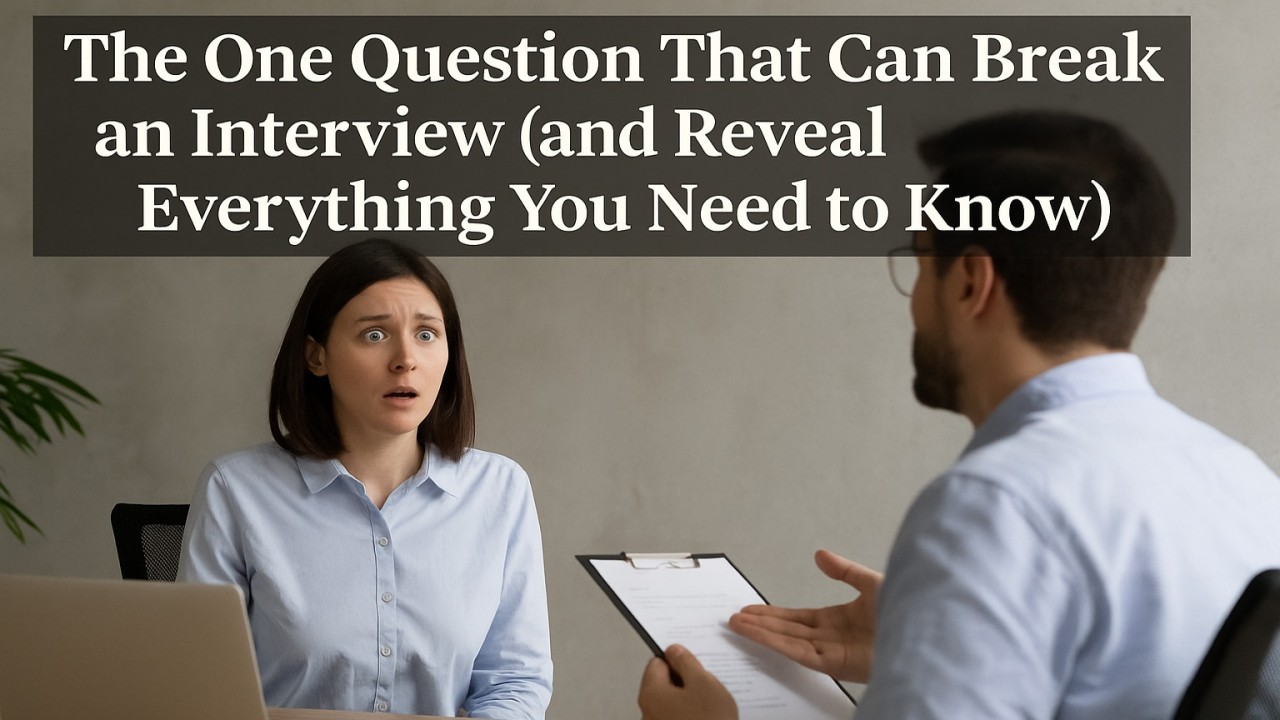
There’s a moment in an interview where the entire atmosphere shifts. You’ve been on the receiving end of 45 minutes of cross examination, your resume dissected line by line, your 2017 career move probed like it’s a cold case file, your proficiency in tools you barely use treated like a matter of national security. The hiring manager is comfortable. Confident. They’ve done this dance before. They know the script and have asked the same ten questions to every candidate for years.
And then, without fanfare, you drop a single question:
“What does success look like in this role?”
The air changes. A breeze of panic rustles across their face. For just a heartbeat, you watch their soul exit stage left. It’s subtle but undeniable, the same look someone gets when they open a group text that’s been blowing up for three hours and realize they’re hopelessly behind.
Suddenly, the interviewer who seemed so sure footed is scrambling. Their posture shifts; their eyes dart like they’re searching for a teleprompter that isn’t there. They were prepared for you to prove yourself. They were not prepared to prove the job.
It’s like you just flipped the interview table over. You were supposed to play defense, but now you’ve slipped into offense, politely, almost innocently and the game changed. What you’re seeing is unscripted truth creeping in. They can’t rely on their usual canned questions anymore. They have to know what the role is, what winning means, and whether there’s an actual plan behind the polished job description. And sometimes, shockingly often, they don’t.
That pause? It’s not just awkward silence. It’s the curtain pulling back. It’s the first sign you’re about to learn something real about the job, maybe more than they meant to tell you.
Buffering in Real Time
What happens next is quietly beautiful, like watching a magic trick in reverse. Silence stretches out between you, thick and humming. You can almost hear the dial-up internet noise as their brain tries desperately to connect. They glance down at their notes, blank. They shift in their chair, maybe clear their throat, maybe click a pen that doesn’t need clicking. Finally, they look up with that strained half-smile and say the universal phrase for “I am stalling”:
“That’s a great question.”
It’s delivered with the same forced optimism a dentist uses before saying the word root canal.
Then, slowly, the word salad arrives.
“Well… success is really about synergy, impact, um, alignment with core initiatives.”
Synergy? Impact? Core initiatives? These are horoscope words, nice sounding, vaguely inspiring, but so broad they could apply to anything from rocket science to running a lemonade stand. They feel meaningful until you try to use them in a sentence that actually explains something.
If success had an address, we just watched them drive it straight into a ditch, set the GPS on fire, and toss the keys into a swamp. The map isn’t just unclear, there might not even be a map.
And here’s the thing: what you’re witnessing isn’t just social awkwardness. It’s an unplanned reveal, the kind of truth that leaks out when people haven’t rehearsed. You asked about direction, and instead of a clear, steady answer, you found a fog machine on full blast. That’s not a fluke; it’s a clue. It’s showing you that maybe this job doesn’t come with a clean definition of winning. Maybe “success” is whatever today’s crisis says it is. Maybe they’re still figuring it out and if you take the job, you’ll be figuring it out with them, while being measured by standards no one’s bothered to define.
It’s uncomfortable, sure. But it’s also priceless insight and it’s happening right in front of you, long before you sign the offer.
When Honesty Escapes
Every once in a while, though, you get an unvarnished answer. No spin. No jargon. Just quiet truth leaking out:
“Honestly, we haven’t figured that out yet.”
It hits the room differently. At first, it’s disorienting, refreshing but also a little terrifying. Because now the job you thought had shape and borders suddenly doesn’t. It isn’t a clearly defined mission; it’s a moving treadmill in a dark room. You’re expected to jump on blindfolded and somehow build the path as you run. They’re still sketching the blueprint, and you’re about to be handed a hammer and told to help finish the house while living inside it.
There’s risk in that. It means you could end up measuring your own success with yardsticks that change week to week. It means your “goals” might be created in real time as the company pivots and re-pivots. Some people thrive in that chaos, builders, creators, people who want to shape the role as they go. But if you came in expecting clarity and guardrails, that honesty can feel like standing on the edge of a cliff and realizing there’s no bridge yet.
But here’s the hidden beauty: at least you know. The mask is off. There’s no fake slide deck about “impactful outcomes” and “driving change.” No buzzword confetti. Just reality, imperfect and a little scary, but real. And real is better than the alternative: polished confusion. Because confusion wrapped in pretty language still leaves you lost; it just tricks you into thinking you’re safe until you’re not.
When someone says outright, “We’re still figuring this out,” they’re telling you what many places won’t. They’re giving you a heads-up about the work ahead and the kind of resilience you’ll need. And that’s valuable. It lets you decide, not just if you can do the job, but if you want this particular brand of chaos. Some candidates will run from that; others will see opportunity. Either way, you’re making a decision with eyes wide open, and that’s worth more than any buzzword filled job description ever printed.
The Culture Rorschach Test
Now, let’s talk about the final boss: culture questions. These are the ones that seem harmless but have the highest chance of short circuiting an interview. Ask a hiring manager, with your most innocent tone, “How would you describe the culture here?” and watch creativity bloom under pressure.
“Our culture is… good! Very good. Family like.”
Fantastic. Which side of the family? The cozy game night side with laughter and snacks, or the Thanksgiving fork throwing side with grudges older than you? “Family like” sounds warm until you remember families also fight, guilt trip, and avoid therapy.
So you press gently: “Why do people like working here?” Cue blinking. Shuffling. A faint bead of sweat. “People… like it. We have snacks sometimes.”
Sir, I appreciate snacks. But I can get Costco Wholesale to solve that problem for me at scale. That’s not culture, that’s bulk buying.
True culture doesn’t need a Pinterest Business board to explain it. When it’s real, it’s lived and felt every day and people can describe it in specific, human ways. They talk about how collaboration actually works when deadlines get brutal. They tell you about managers who back them up in meetings, about leaders who listen and act on feedback, about small traditions that make the team feel connected. They share stories, a boss who went out of their way to help during a family emergency, a team that celebrated someone’s crazy idea until it became a big win, a meeting where conflict was hashed out respectfully and no one left humiliated.
That’s culture. That’s belonging. That’s something worth joining.
If instead, you get “we’re like a family” and “we have snacks,” it’s not just lazy language, it’s a potential red flag. It could mean the company has never examined how it actually treats people or doesn’t want to admit the truth. “Family” can sometimes mean “we expect loyalty but won’t guarantee fairness.” It can mean “everyone does everything because there’s no structure.” It can mean “we hope you’ll ignore the lack of boundaries because we said we’re close knit.”
Culture is the operating system of a workplace. It’s how decisions get made when no one’s watching, how conflict gets solved, how credit gets shared (or stolen). If your interviewer can’t articulate it beyond generic buzzwords, odds are they don’t know or don’t want to say. And if they can’t define it, you’ll spend your first few months figuring it out the hard way.
So treat this moment like a soft focus X-ray. Listen to the hesitation. Watch what happens when the script runs out. Do they light up and tell real stories? Or do they look like they’re trying to remember what was on the last company all hands slide? The difference between those two answers could be the difference between thriving at work and quietly updating your resume six months in.
Cracking the Compensation Vault
And then there’s the question you’re not supposed to ask but absolutely should:
“Is the salary range flexible?”
It’s like you’ve just asked to borrow their car, their Netflix password, and their firstborn all at once. Eyes widen. Smiles tighten. A cold draft enters the room even if the AC isn’t on. Suddenly the vibe goes from “we’re a team!” to “you’ve breached HR protocol and the compliance wizards have been alerted.”
Sometimes they scramble to change the subject: “Well, compensation is competitive…” Competitive with what? Hunger Games? Sometimes they shoot you a look usually reserved for people who cut in line at the DMV. Other times, they deflect to “HR handles that” as if HR is an unapproachable fortress guarded by dragons and email autoresponders.
But here’s the truth: transparency isn’t dangerous, it’s healthy. Money isn’t a dirty secret; it’s the practical backbone of why we work. Companies that can’t talk openly about pay usually can’t negotiate fairly, either. And if asking a basic, calm question makes them sweat like you just uncovered a corporate conspiracy, imagine what actual raises or promotions will feel like.
That moment tells you a lot. It tells you how the company views fairness, whether growth is measurable and rewarded, and whether they treat compensation like a game of 20 questions. If the pay conversation feels like breaking into a vault now, don’t expect the vault to magically swing open later when you’ve proven yourself.
A healthy organization doesn’t get spooked by the topic. They may have limits, sure, but they’ll explain them. They’ll show that salary is structured, not mysterious; that growth isn’t locked behind secret handshakes. An unhealthy one will turn evasive, vague, or defensive. They’ll act like you’ve disrupted the natural order by daring to wonder if your time and skills have value.
And here’s the kicker, asking isn’t rude. It’s responsible. It’s part of evaluating whether the opportunity fits your life, your goals, and your worth. Employers expect you to research, prepare, and negotiate. So don’t let their discomfort convince you you’ve done something wrong. You haven’t. You’ve just tested whether this company can have an adult conversation about the thing that fuels retention more than ping pong tables and “family vibes” ever could.
Why Awkwardness Is a Gift
Here’s where the magic flips: those awkward moments aren’t failures on your part, they’re tiny, unscripted windows into the company’s reality. They’re not signs you asked the wrong thing; they’re signs you asked the right thing. In fact, you just moved the interview out of its polished, controlled script and into something real. And that realness is priceless.
Most candidates walk away from an interview thinking all the pressure is on them, I have to impress them. I have to be sharp, likable, fast with answers. But the truth is, you’re not just being evaluated; you’re evaluating, too. Interviews are supposed to be two way conversations, not one way interrogations. The questions you ask and the answers you get give you an unfiltered preview of the company’s operating system.
If leadership can’t define success when you ask, don’t expect that to magically appear once you’re hired. Goals that are fuzzy in the interview will still be fuzzy when your performance review shows up. And you can’t hit a target no one’s willing to hang on the wall.
If the culture answer is all fluff, snacks, ping pong tables, “we’re like family” brace for disconnection and drift. A healthy culture is tangible; people can describe how they work together, how decisions are made, how conflict is handled, how wins are celebrated. If all you get are clichés and a mention of free sparkling water, that’s a clue you’ll be learning the real rules the hard way.
And if pay transparency feels like a felony, if your simple, professional question about salary makes the room colder than an abandoned conference call, understand what that means for your future. Raises will be opaque, promotions will be murky, and you’ll have to guess whether your growth matches your pay.
You’re not just a candidate hoping to be picked; you’re a consumer shopping for a career. Your labor, your talent, and your time are a product. You’re about to hand them years of your life and you deserve to know what you’re getting in return. That moment of awkwardness? It’s a demo version of the company’s clarity and honesty.
So take notes. Watch how they react when they can’t lean on a script. Are they candid and thoughtful, or evasive and vague? Do they invite the conversation, or shut it down? This is your free trial before you subscribe to their chaos. You can walk away if the preview isn’t promising.
That’s the real shift: you have agency. You’re not lucky just to be there; they’re lucky you showed up. And if the interview shows you more fog than road, it’s not rejection, it’s redirection. Better to know now, before the email signature and the first day login, than months later when you’re deep in a job that never made sense to begin with.
Walking Away With Power
So next time you ask a question and watch the air glitch for a second, remember: that’s data. That’s not awkwardness to apologize for, that’s your preview of life on the inside. It’s an unscripted honesty check that no job posting or polished “About Us” page will ever give you. And it’s okay — smart, even — to take it seriously.
The company just auditioned for you, whether they realized it or not. They showed you how they think, how they handle pressure, and how clearly they understand the very job they’re hiring for. If they fail their own test, if success is undefined, culture is nothing more than Costco snacks and empty slogans, and pay is a whispered secret behind closed doors, it’s not your job to fix them. It’s your signal to step back and move on before you’re the one stuck untangling their chaos.
Because somewhere out there is a team that actually knows what winning means and can explain it without a PowerPoint full of buzzwords. Somewhere there’s a manager who can describe the culture with stories, not stock phrases. There are companies that treat pay transparency as a basic courtesy, not a state secret because they know clarity builds trust and trust keeps people.
Until you find them, keep asking. Keep flipping the script. Keep watching for that soul leaving body moment. It’s not sabotage; it’s self protection. It’s you doing due diligence on your future. A clear eyed candidate is a powerful candidate.
And when the interview ends, hold onto this truth: you’re not just lucky to be in the room. They’re lucky you took the time, energy, and nerve to show up. They’re lucky you cared enough to ask real questions. And if you decide to say yes, they’ll be luckier still, because you’re not just filling a seat. You’re choosing to invest your talent somewhere that’s proven itself worthy of it.