The other day, I went out for what career coaches call “social networking.” You know, the thing they swear is essential if you ever want to be employed again. They make it sound so empowering “Go make connections!” as if walking into a room full of strangers who all pretend to care about your business card is some kind of spiritual awakening.
So there I was, standing in a crowd of professionals clutching a plastic cup of wine that tasted like disappointment and unpaid invoices, mentally rehearsing my elevator pitch for the 40th time like a desperate intern auditioning for Shark Tank: Midlife Edition.
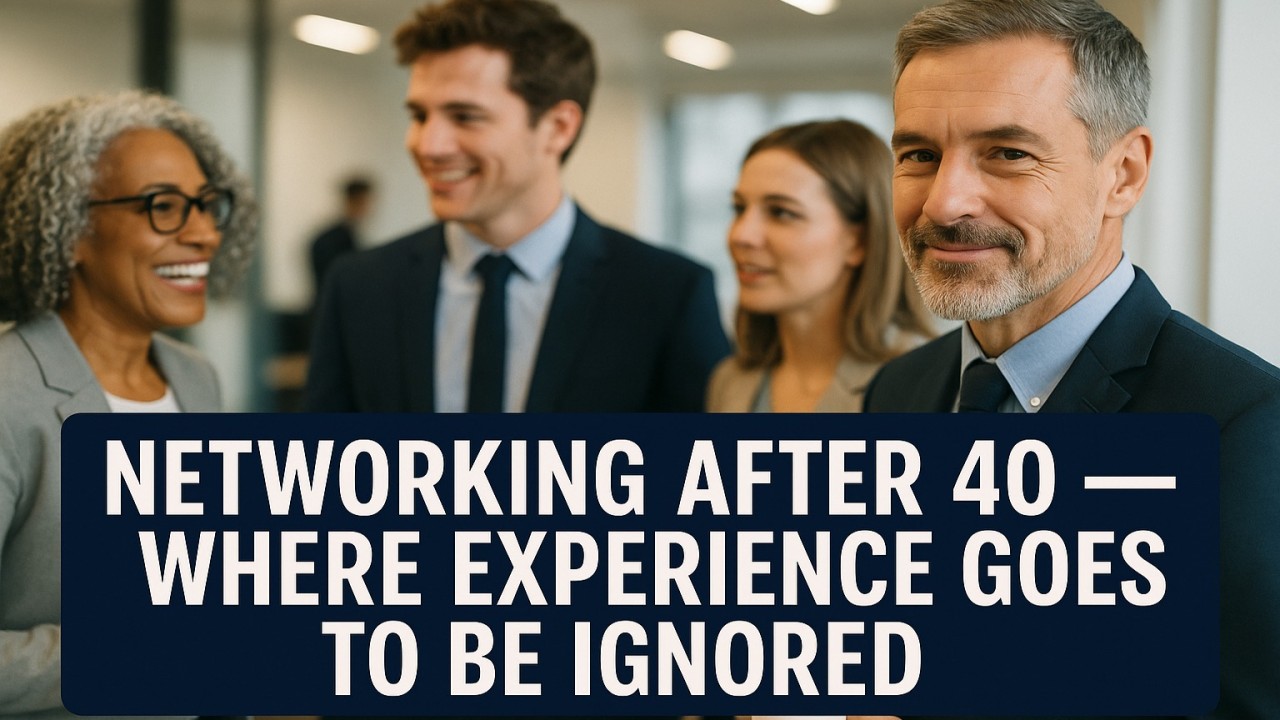
Enter: a recruiter. Nice enough. Confident handshake. Name tag that screamed “LinkedIn Premium subscriber.” We did the small talk dance, what I do, what I’m looking for, how many times I’ve cried in a parking lot this quarter. Everything was going smoothly until I mentioned my leadership experience, my years of results, my stack of references. You know, the boring stuff that used to matter before people started listing “vibes” as a core skill.
Then, with the sincerity of someone confessing they once stole a stapler, she leaned in and said,
“I’ll be honest with you, most of our clients are only hiring people under 40 right now.”
I blinked twice. Maybe she was joking? Maybe it was performance art? But no, she was dead serious. Age discrimination wasn’t hiding behind corporate jargon anymore, it was sipping merlot with a networking badge.
And that’s when it hit me: “networking” was just a socially acceptable way to get rejected in public, with snacks.
When “Experience” Becomes a Liability
We grew up hearing that experience was everything. “Work hard, build your resume, and success will follow.” That was the gospel of every career counselor, mentor, and inspirational poster in every office hallway. Experience was the golden ticket, the thing that separated the amateurs from the professionals, the interns from the decision makers.
Well, apparently success took another route. Because these days, the moment your gray hairs start outnumbering your followers, you go from “seasoned professional” to “ancient relic of the Microsoft Office era.” You’re not viewed as wise anymore, you’re “set in your ways.” You’re not a mentor, you’re “intimidating.” And heaven forbid you mention fax machines without irony, because suddenly you’re being treated like you arrived at the networking event on horseback.
You tell them you’ve managed teams, led projects, increased sales, mentored others and suddenly you’re being evaluated not for your achievements, but for how “well you might adapt to new technologies.” Translation: “Can you use Slack without calling IT?” It’s not enough to have built systems, now you’re expected to worship the newest app that rebrands what you’ve already mastered.
The irony is rich. The same people who post about “diversity and inclusion” are quietly excluding anyone who remembers when “the cloud” was just weather. They claim to value wisdom, but only if it comes with ring lights and Reels. They say they want “innovators,” but what they really want are cheap, energetic hires who haven’t yet learned to question poor management.
And when you finally get that interview, they’ll smile politely and say, “We’re looking for someone who can grow with the company.” Which sounds noble, until you realize “grow” is code for “someone who’s still young enough to think burnout is a personality trait.”
I used to believe experience was currency. Turns out, in today’s job market, it’s more like Confederate money, historically interesting, beautifully detailed, but no longer accepted anywhere legitimate. The worst part? Half the people pretending not to notice your resume’s age are secretly terrified of becoming you, proof that loyalty, longevity, and leadership no longer guarantee security in a world that only rewards novelty.
But here’s the thing: experience doesn’t expire. It just makes people uncomfortable who haven’t earned their own yet.
The Networking Circus: Where Everyone Pretends to Care
Networking events have become modern day masquerades, where everyone’s pretending to be “open to opportunities” while secretly praying they don’t get cornered by someone from insurance sales. You walk in thinking you’ll make meaningful connections, armed with your best smile and your last ounce of optimism. You leave with six business cards, three fake smiles, and one recruiter who just told you you’re too old for her clients. The hors d’oeuvres are cold, the compliments are rehearsed, and the air smells faintly of ambition and panic.
Around me, the 20 somethings were buzzing like motivational podcasts come to life. “Just keep your energy high,” one of them said. “Recruiters can feel desperation.” I wanted to tell her that at this point, desperation was my cologne, eau de LinkedIn Refresh, with subtle notes of unpaid potential and existential dread. They were all “manifesting” their dream jobs, talking about “building their brand” like it was a side hustle ordained by the algorithm. I tried to join in, but apparently, saying “I’d just like a paycheck and basic respect” wasn’t part of the modern vision board vocabulary.
Everywhere I turned, someone was “manifesting opportunities.” Meanwhile, I was manifesting the will to stay polite and the patience not to roll my eyes when yet another person told me they were “pivoting into thought leadership.”
Networking used to mean collaboration, real people helping each other climb. Now it’s just competitive self-promotion disguised as connection. It’s not about who you know anymore, it’s about who’s watching you know them. You can feel the tension in every handshake: the silent calculation of, “Are you useful to me?” Everyone’s smiling, but their eyes are scanning the room for someone better to talk to.
And the irony? Half the people pretending to be confident are just as lost as everyone else. They’re swapping stories about “new roles” that don’t exist yet, “interviews” that were really automated rejections, and “consulting gigs” that pay in exposure.
So when that recruiter told me her clients were only hiring under 40, I realized something: I wasn’t networking, I was window shopping for relevance. A walking antique in a store where “fresh perspectives” come in 25 year old packaging. But as I left, sipping the last of my $6 disappointment wine, I smiled. Because maybe the problem wasn’t that I didn’t belong there. Maybe the problem was that the room was too small for experience that big.
The Silent Epidemic of Polite Discrimination
Let’s be clear: this wasn’t a rogue comment from a tactless recruiter. This is the quiet part of corporate hiring that’s finally being said out loud. Job postings ask for “high energy candidates.” Interviews focus on “culture fit.” LinkedIn posts celebrate “young innovators.” And in between every word, there’s a silent disclaimer: No seasoned professionals need apply.
It’s polite discrimination. No lawsuits, no smoking gun, just an invisible expiration date stamped on resumes. And when you bring it up, you’re told you’re “reading too much into it.”
But here’s the truth: the workplace doesn’t fear your age; it fears your awareness. You’ve seen the patterns, survived the politics, and can spot incompetence from a mile away. That makes you dangerous in a culture built on buzzwords and branding.
So they hide behind terms like “fresh perspectives” and “fast paced environment,” which are really just euphemisms for “we want someone younger, cheaper, and easier to impress.”
And somehow, they expect you to smile through it, to be grateful for “feedback” that’s actually a confession.
Seasoned, Not Expired
But here’s the twist. I’m not bitter. I’m just seasoned, like a cast iron skillet. You can’t microwave what I’ve built. You can’t Google the lessons I’ve learned. My experience didn’t come from webinars, LinkedIn courses, or influencers explaining “grit” over lo-fi beats. It came from late nights when the office lights were off and I was still there, trying to fix what no one else could. From impossible deadlines that turned into career defining victories. From learning how to lead people, not manage them. From staying calm when everyone else hit panic mode.
So no, I’m not outdated, I’m well marinated. I’ve been tested, scraped, burned, seasoned, and still hold heat better than ever. The shine may have worn off, but the quality never will.
If companies want to bet their futures on people who still use “LOL” unironically in cover letters, let them. I’ll be over here building something that lasts, something built on substance, not buzzwords. Let them chase trends while I build legacy. Let them collect followers while I collect results.
Because the truth is, leadership isn’t about being the youngest in the room, it’s about being the one who still shows up after the world stops clapping. It’s about wisdom that doesn’t need validation, patience that’s been earned the hard way, and the quiet confidence that comes from surviving more than one economic collapse. It’s about knowing when to speak up and when to let silence do the heavy lifting. It’s about understanding that culture doesn’t come from beanbags and slogans, it comes from people who’ve lived enough to know what matters.
So thank you, to the recruiter who admitted what so many whisper. You did me a favor. You stripped away the illusion that the system still rewards merit. I no longer have to chase validation from people allergic to wisdom, allergic to humility, allergic to anyone who reminds them that the job market didn’t start in 2010.
I’ll keep showing up, wrinkles and all, until someone realizes that the best hires aren’t the newest, they’re the ones who’ve been sharpened by failure, humbled by time, and still refuse to quit. The ones who can walk into chaos and leave it organized. The ones who remember when integrity wasn’t optional and respect wasn’t negotiable.
And when that day comes, when the world finally rediscovers the value of grit over gloss, my headline will read exactly what it should have all along:
“Too old for your bias. Too valuable to ignore. Still standing. Still leading.”