It began, as most modern tragedies do, with a notification. One second I was minding my own business, drinking coffee and pretending to be productive, and the next—boom—Facebook told me it had “memories to look back on.” Memories, of course, meaning evidence. Evidence of poor fashion choices, failed relationships, and motivational quotes I clearly didn’t live by.
But before I could spiral too far into nostalgia, LinkedIn chimed in with its own seductive whisper: “People are viewing your profile.” It’s incredible how six words can send you into a full-blown identity crisis. Who’s looking? Why? Did I accidentally apply for something? Should I post a thought about resilience before they realize I’m unemployed?
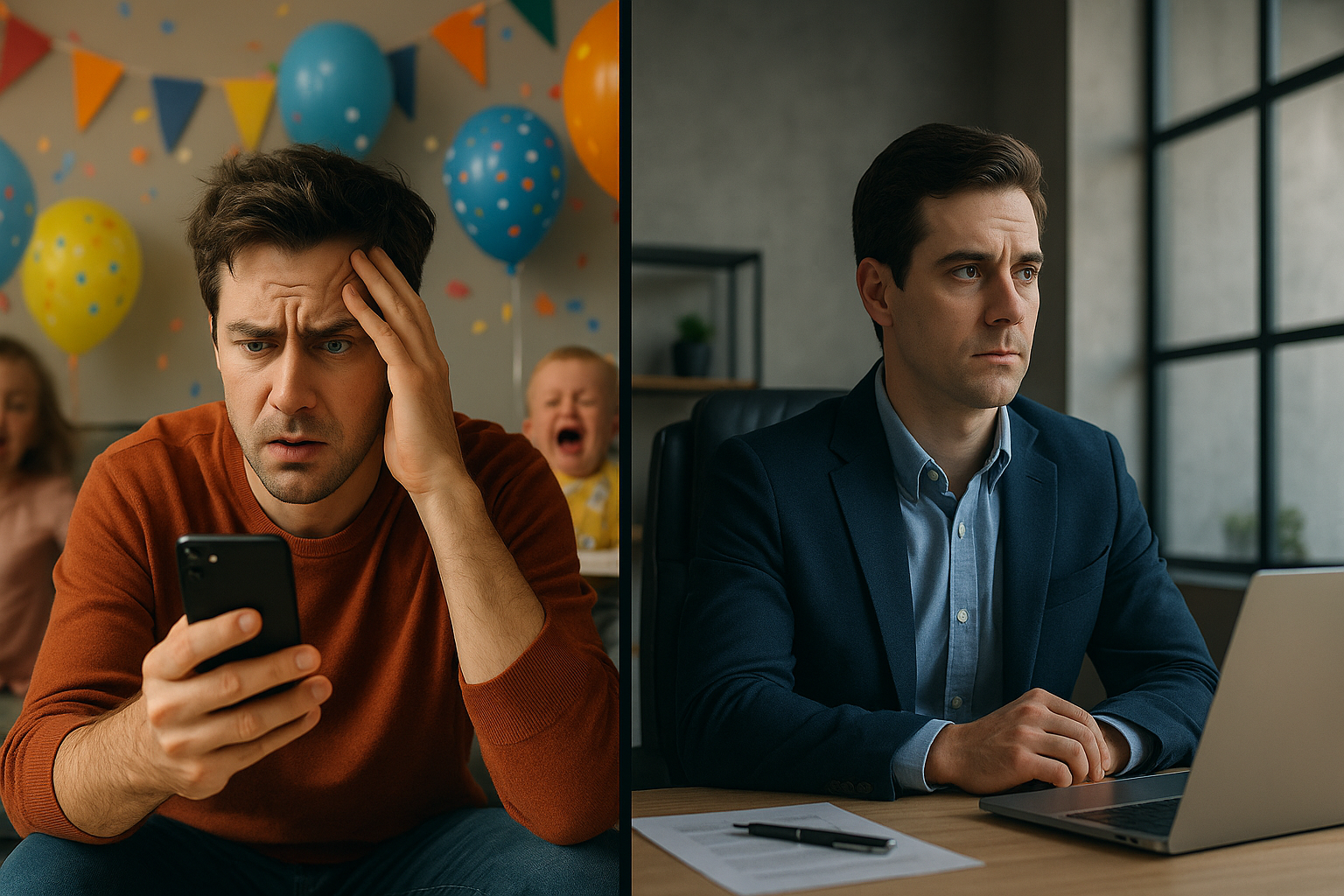
And that’s when it hit me—Facebook and LinkedIn aren’t social media platforms. They’re divorced parents locked in a bitter custody battle over who gets to ruin my mental health this week. Facebook’s the fun, chaotic parent who lets you stay up too late watching cat videos and conspiracy theories about oat milk. LinkedIn’s the strict, overly polished parent who wants to talk about “career alignment” before breakfast.
Both promise connection. Both deliver anxiety.
Facebook wants me to feel something—nostalgia, outrage, the urge to buy herbal supplements from a friend I haven’t seen since middle school. LinkedIn wants me to be something—employable, inspiring, and ideally endorsed for “strategic communication” by someone who once sat next to me at a webinar.
And here I am, the child of this digital divorce, toggling between two worlds: one where my aunt argues about vaccines under a meme, and one where a stranger posts a 47-slide carousel on “What Leadership Taught Me About Folding Laundry.”
It’s not networking anymore. It’s therapy—except everyone’s performing their trauma in business casual.
Facebook — The Wild West of Emotional Oversharing
Let’s talk about Facebook, the platform that peaked somewhere between FarmVille and your uncle’s first political awakening. It’s not really a social network anymore—it’s an open mic night for opinions nobody asked for.
You log in to “just check something,” and three hours later you’ve learned your high school lab partner sells miracle candles, your neighbor’s in a love triangle, and your mom tagged you in a 2008 photo album titled “Family BBQ & Bad Decisions.”
Every scroll feels like rummaging through the world’s biggest digital attic. There’s nostalgia, there’s regret, there’s the occasional passive-aggressive quote that’s definitely about someone specific. And of course, there’s that one person who posts inspirational paragraphs that begin with “Not everyone will understand your journey…”—which is true, because nobody asked for a TED Talk about your divorce, Brenda.
But the real magic of Facebook lies in its chaos. It’s where every conversation is a slow-motion car crash of emotion. Someone posts about their dog’s birthday, and somehow it turns into a 97-comment political debate featuring three strangers and one guy named “Big Tony” typing in all caps.
And yet, I can’t look away. Facebook’s algorithm is like a manipulative ex—it knows exactly what to show me to keep me coming back. A photo from college. A meme that makes me laugh. A targeted ad for something I literally just mentioned out loud five minutes ago. It’s unsettling and addictive—a toxic cocktail of nostalgia and surveillance.
The truth is, Facebook isn’t social media anymore. It’s a museum of our collective oversharing, curated by Mark Zuckerberg and fueled by regret. Every “memory” it shows me is a reminder that I used to think hashtags made me deep.
Still, I can’t delete it. Because where else would I go to see what everyone’s really thinking before they clean it up for LinkedIn?
LinkedIn — The Corporate Thunderdome of Forced Positivity
Ah, LinkedIn. The only place on Earth where people describe unemployment as a “season of professional reflection.”
If Facebook is chaos, LinkedIn is control—a place where everyone’s pretending their life is a leadership seminar. It’s like walking into a room where everyone’s clapping for themselves in business attire. “Thrilled to share this new chapter!” “Grateful for the opportunity to grow!” “Honored to have been laid off with grace and dignity!”
Every post is a humblebrag wrapped in motivational jargon. Someone gets a promotion and suddenly becomes a philosopher. Someone attends a webinar and writes a 2,000-word essay about “redefining success.” Someone takes a nap and calls it “practicing mindful productivity.”
The comment section? A corporate echo chamber where people write “Well said!” under things that were, in fact, not well said. The enthusiasm is so forced you can practically hear the collective burnout humming through the Wi-Fi.
And don’t get me started on recruiters. They slide into your inbox like digital phantoms: “Hi Alex, I came across your profile and think you’d be perfect for a position!” You respond within five minutes—then they vanish forever, presumably absorbed by the algorithm. A week later, LinkedIn sends a notification: “This recruiter viewed your profile.” Yeah, I bet they did. Probably while ghosting another five people.
But the strangest thing about LinkedIn isn’t the performative optimism—it’s how contagious it is. You start out mocking it, and next thing you know, you’re writing posts like: “Had a powerful conversation with my barista today about empathy. Leadership is everywhere if you listen.”
It’s the corporate equivalent of Stockholm Syndrome.
The Algorithmic Tug-of-War for My Soul
So here I am—caught between Facebook’s chaos and LinkedIn’s professionalism, trapped in a feedback loop of digital identity crises. One platform reminds me of who I was, the other demands I become someone better. And the worst part? They’re both right.
Facebook says, “Be real.” LinkedIn says, “Be remarkable.” And somewhere in the middle, I’m just trying to remember my password.
Their algorithms are like jealous exes competing for my attention. Facebook floods me with nostalgia bombs: “Remember this day in 2012?” Yes, I do, and I wish I didn’t. LinkedIn counters with ego boosts: “People are viewing your profile.” Fantastic. Now, how about viewing my job applications?
They both claim to care about “connection,” but what they really mean is “data.” Facebook wants to know who you love. LinkedIn wants to know who you work for. Both want to monetize your midlife crisis in real time.
And yet, I play along. I post carefully curated fragments of myself—too real for LinkedIn, too restrained for Facebook—trying to maintain some fragile balance between sincerity and sarcasm. It’s digital identity gymnastics, and the judges are robots.
Some nights I think about quitting both. I fantasize about deleting everything and living in blissful anonymity, free from the dopamine drip of notifications. But then Facebook says, “You’ve been tagged in a photo.” LinkedIn says, “Congratulations, your post is trending in #leadership!” And I’m back—hooked, scrolling, pretending I’m above it all while absolutely not being above it all.
Final Thoughts: I’m Not Logging Off—Just Logging Feelings
The truth is, Facebook and LinkedIn are two sides of the same algorithmic coin. One feeds my nostalgia, the other feeds my ambition. One makes me feel seen, the other makes me feel judged. Together, they’ve built a digital ecosystem where we’re all curating our chaos for likes and validation.
Maybe the problem isn’t the platforms. Maybe it’s us—the self-aware, overly caffeinated generation that knows better but does it anyway.
We say we want connection, but what we really want is attention. We say we hate the algorithm, but secretly, we just want it to love us back.
So I’ll keep posting. Keep scrolling. Keep pretending this endless performance of self has meaning. Because even though Facebook and LinkedIn are fighting for custody of my sanity, the truth is—I’m a willing participant in the drama.
After all, what’s a little existential exhaustion between friends, coworkers, and strangers who liked my post about resilience?
😂0😍0😢0😡0👍0👎0