There are questions that shape civilizations—“What is the meaning of life?” “Are we alone in the universe?”—and then there’s this one: “If you were an animal, what animal would you be?” Somehow, this question has survived every advancement in human communication. It outlived the fax machine, made it through the era of motivational posters, and now lurks in every HR icebreaker like a polite parasite.
You know the scene. It’s 8:59 AM. You’re half-awake on a company Zoom call, sipping lukewarm coffee while your soul quietly negotiates a truce with consciousness. Then someone cheerful—always the person with color-coded sticky notes—smiles and says, “Let’s go around and share! If you were an animal, what would you be?”
Panic. Existential panic. You can feel your heartbeat syncing with the Teams notification sound. Everyone else suddenly looks prepared. The extroverts go first—one says “lion,” the other says “eagle.” You can tell they’ve been waiting for this question their entire lives. You, meanwhile, are just trying to remember if caffeine counts as a personality trait.
You can’t say raccoon. You can’t say sloth. You can’t say pigeon even though that’s the truest answer—surviving on crumbs, dodging chaos, occasionally aggressive, occasionally majestic, and definitely tired. You have to pick something that sounds aspirational but not pretentious, bold but not concerning, smart but not condescending. You have to brand yourself as an animal.
And in that moment, you realize this question isn’t about animals at all—it’s about identity, survival, and how deeply you’ve learned to perform enthusiasm while questioning your entire existence.
The Animal You Say You Are
Let’s start with the version you share in professional settings. You’re not answering truthfully—you’re answering strategically.
The “lion” people always go first. They like to use words like leadership and confidence while casually ignoring that lions sleep 20 hours a day and outsource hunting to others. Then come the “eagles”—the visionary types who love a good PowerPoint and see themselves as “big-picture thinkers.” The “wolf” crowd chimes in next, reciting pack analogies about teamwork while secretly emailing their resumes to competitors.
Then there’s you. You’re trying to decide if you can say “cat” without sounding emotionally unavailable. Or maybe “dog,” but that feels too eager. “Dolphin” sounds like you once attended a seminar on empathy. “Horse” implies endurance but also possible burnout. Every option feels like a LinkedIn archetype waiting to happen.
You look around the virtual grid of faces, wondering how everyone else seems so confident in their self-animalization. But deep down, you know this question isn’t about honesty—it’s about marketing. You’re not describing your soul; you’re pitching it.
It’s the same logic behind corporate mission statements. “We’re passionate about innovation!”—translation: we’re mildly organized chaos held together by caffeine and denial. “We’re a family!”—translation: no one gets raises, but we’ll guilt-trip you with cupcakes. “I’m a lion!”—translation: I’m competitive and insecure but hiding it behind a growl.
So you choose something safe, smile into the camera, and say, “I think I’d be an owl.” Everyone nods approvingly. You’ve said something intelligent and mysterious. Inside, however, you feel like a stressed-out goldfish who keeps swimming in circles hoping someone refills your coffee.
The Animal You Actually Are
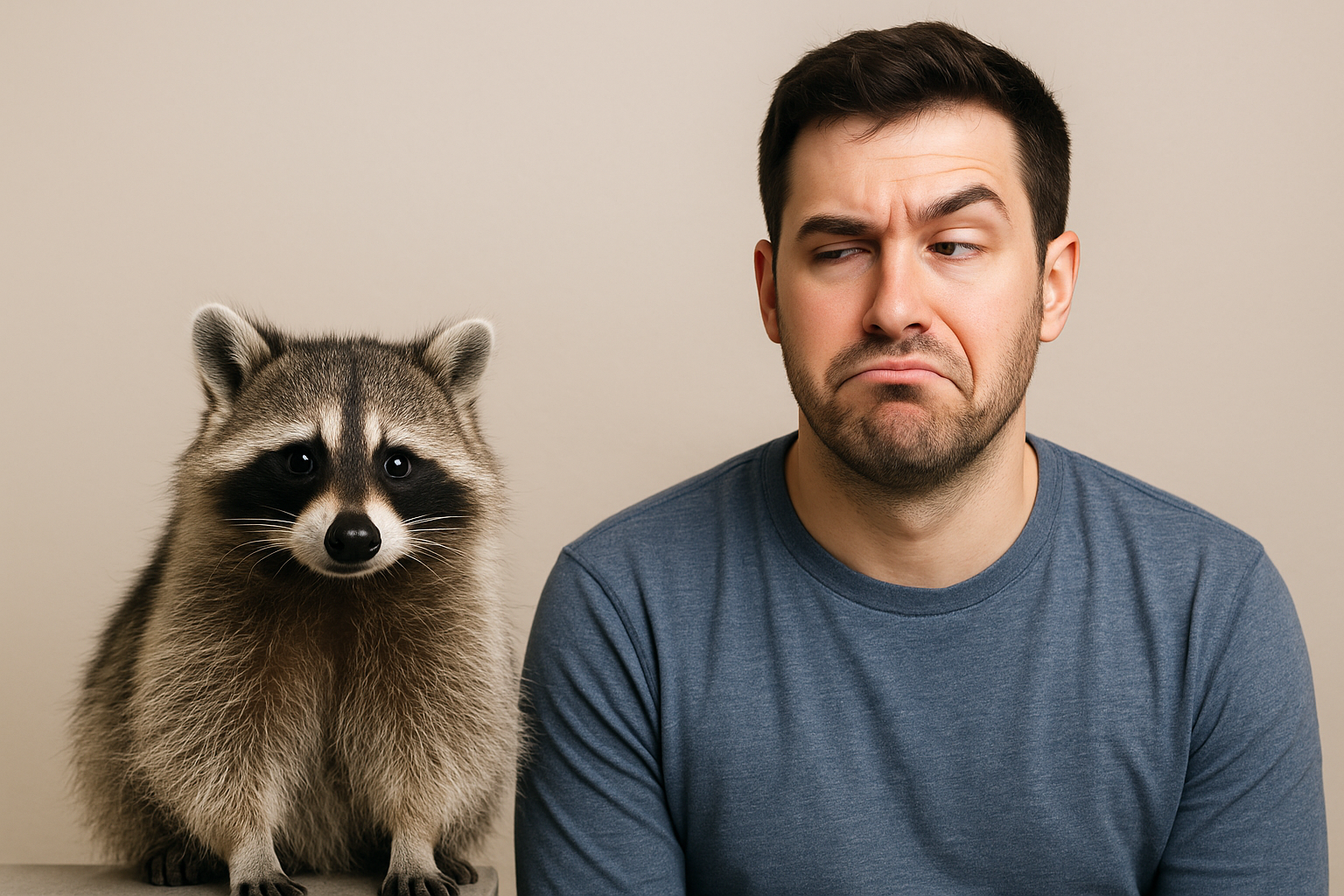
Now that the meeting is over and the performance is done, let’s talk reality. You’re not a lion. You’re not an eagle. You’re not even a housecat. You’re the over-caffeinated raccoon of late capitalism—resourceful, restless, and surviving on whatever emotional leftovers you can find in the dumpster fire of modern employment.
You’ve adapted to fluorescent lighting, broken printers, and motivational posters that say things like “Teamwork makes the dream work” even though your team hasn’t collectively dreamed since 2016. You thrive in chaos, hoard snacks, and occasionally hiss when cornered by deadlines.
Or maybe you’re a pigeon—one of those city birds that’s somehow still functioning despite constant noise, pollution, and the daily threat of being emotionally run over by someone else’s crisis. You wake up, flap around, find crumbs (paychecks), and call it resilience.
Some days, you’re a golden retriever—optimistic, loyal, and endlessly forgiving of corporate dysfunction. You try to please everyone, wagging your metaphorical tail in meetings, smiling even when your soul is begging for PTO. You live for recognition, even if it’s just a “good job” emoji in Slack.
Other days, you’re a cat. You value your independence, your naps, and your right to walk away mid-conversation if someone says “synergy.” You do your job efficiently but on your own terms. You despise unnecessary noise, forced collaboration, and “surprise brainstorming sessions.”
And if you’re honest, there’s a part of you that’s pure sloth—moving only when absolutely required, conserving emotional energy for coffee breaks and internal screaming. You’re slow, deliberate, and entirely unimpressed by urgency emails sent at 4:59 PM.
The truth is, none of us are one animal. We’re shape-shifters, emotional hybrids of survival and exhaustion. We are multitasking octopi, sarcastic meerkats, overthinking owls, and slightly drunk raccoons who have seen too much.
And while HR might not approve of those answers, evolution certainly would. Because adaptability—not performance—is the real mark of survival.
The Animal You’re Becoming
This is where things get philosophical. The animal you say you are belongs to your LinkedIn version. The animal you actually are belongs to your reality. But the animal you’re becoming? That one’s still emerging—somewhere between burnout and rebirth.
Maybe you’re becoming a phoenix—tired of dying inside every quarter, but somehow still managing to rise from the ashes of unpaid overtime and rejection letters. You’ve learned to rebuild yourself out of caffeine and coping mechanisms.
Maybe you’re turning into an armadillo, rolling into a defensive ball every time someone mentions “team offsite.” You’ve learned boundaries. You protect your peace. You know when to shut down and recharge.
Or maybe—most likely—you’re becoming an evolved raccoon. Smarter. Sharper. More self-aware. You no longer dig through trash for validation—you dig through it for opportunity. You’ve realized that being “wild” doesn’t mean being reckless; it means being real. You’ve stopped performing animal metaphors and started embracing the one that truly fits.
Because at the end of the day, what this question really asks is: Who are you when you stop pretending to be impressive?
Are you the bird that keeps flying no matter how strong the wind? The turtle that keeps moving slowly but never gives up? The cat that protects its solitude like treasure? Or the raccoon that refuses to die quietly in a world that keeps trying to tidy itself up?
We live in a world that rewards performance over authenticity, polish over instinct. So maybe the truest answer isn’t something out of a leadership seminar. Maybe it’s something messier, funnier, and more human.
“If I were an animal,” you could finally say, “I’d be the raccoon in the parking lot at 2 a.m.—scrappy, adaptable, hungry for meaning, and always finding a way to survive no matter how many lids are screwed on too tight.”
That’s not a failure of character. That’s the triumph of evolution.
So next time the question comes up during an icebreaker, skip the lion. Skip the eagle. Skip the HR-approved metaphors. Look into the camera, sip your coffee, and say proudly:
“I’m the raccoon. And honestly? I’m doing great.”
Because in a world full of self-proclaimed lions, sometimes the trash panda is the only one smart enough to find dinner.